

3 images of the STOVE in Russian Fairy Tales
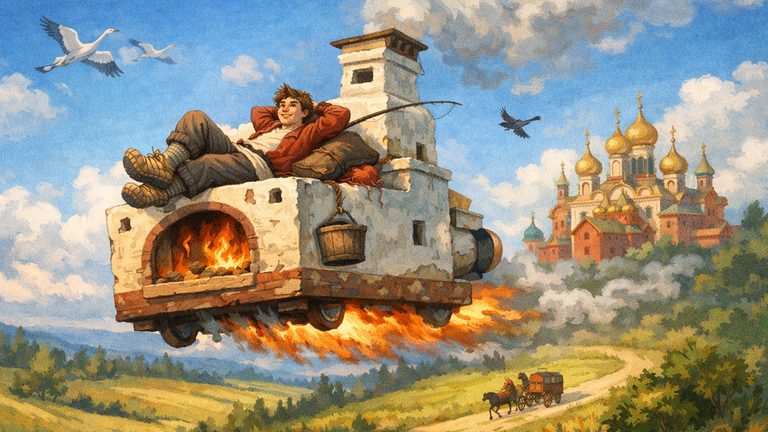
In Russian folk tales, the stove is much more than just a household appliance. It serves as a “mother's womb”, a means of transportation and a magical helper, helping out in difficult situations.
To understand the role of the stove in Russian folk tales, it's helpful to imagine it in the real life of peasants. In a peasant hut, the stove occupied a significant place, both in terms of space and importance. It provided warmth, food and a place to sleep. A properly built and heated stove could retain heat for more than a day. Bread and pies were baked in it, cabbage soup and porridge were cooked. Weak and sick babies were "baked" in it, older children were washed and steamed, while the elderly were laid on it, alleviating age-related ailments. Rituals and a household guardian spirit, the ‘domovoi’, were also associated with the stove.
Based on this reality, several key images of the stove developed in folklore:
Protector & magical helper
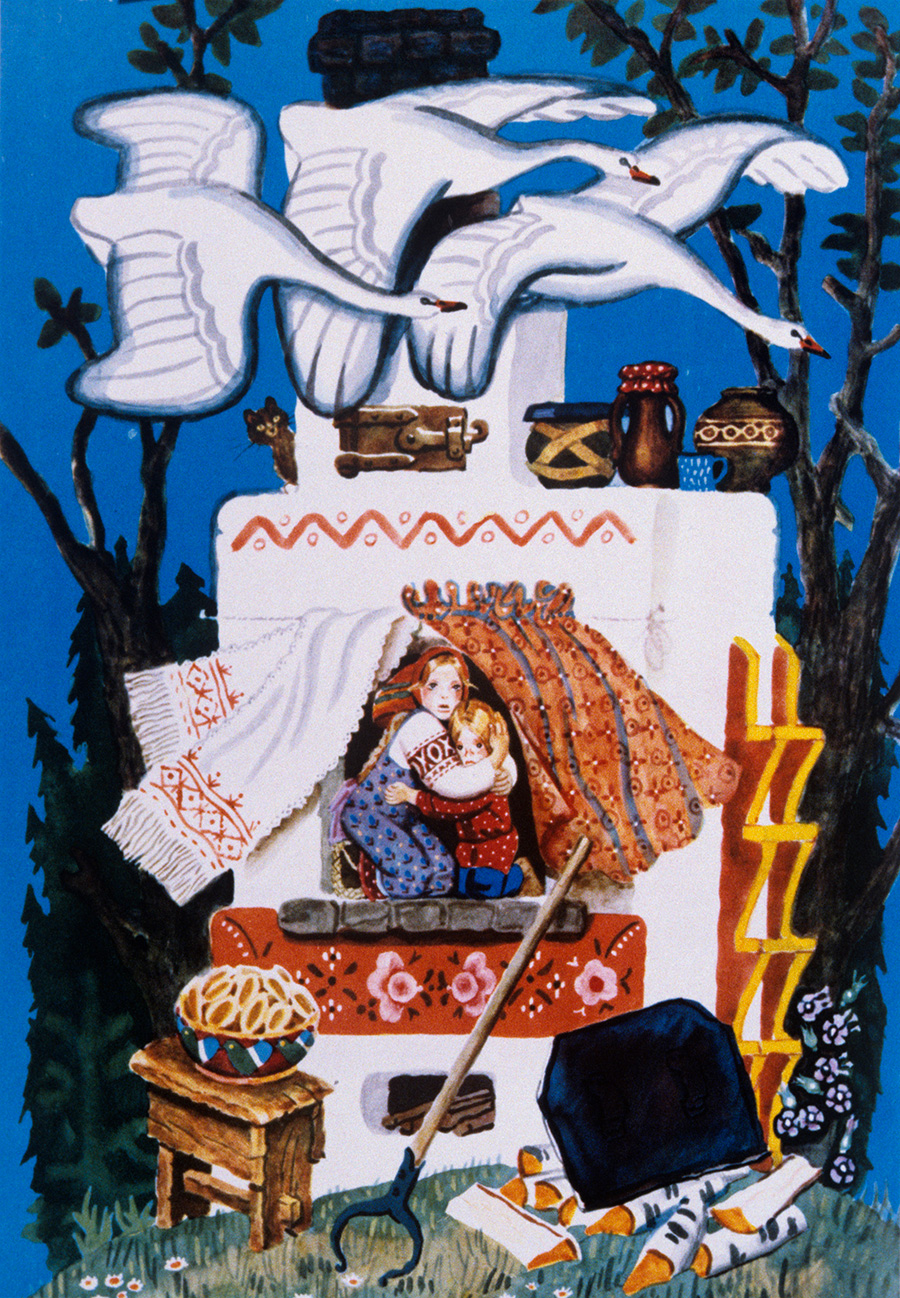 Reproduction of Veniamin Losin's illustration for the fairy tale "Geese-Swans"
In Russian fairy tales, the stove is often portrayed as a wise and kind creature, ready to come to the aid of the protagonist. It speaks to them, offers wise advice, feeds and hides them from pursuers. The most famous example is the tale ‘Geese-Swans’. The stove offers a girl, who is trying to save her brother, a rye pie and a place to hide inside from dangerous birds.
Trial and rebirth: the ritual of ‘perekacheniye’ (rebaking)
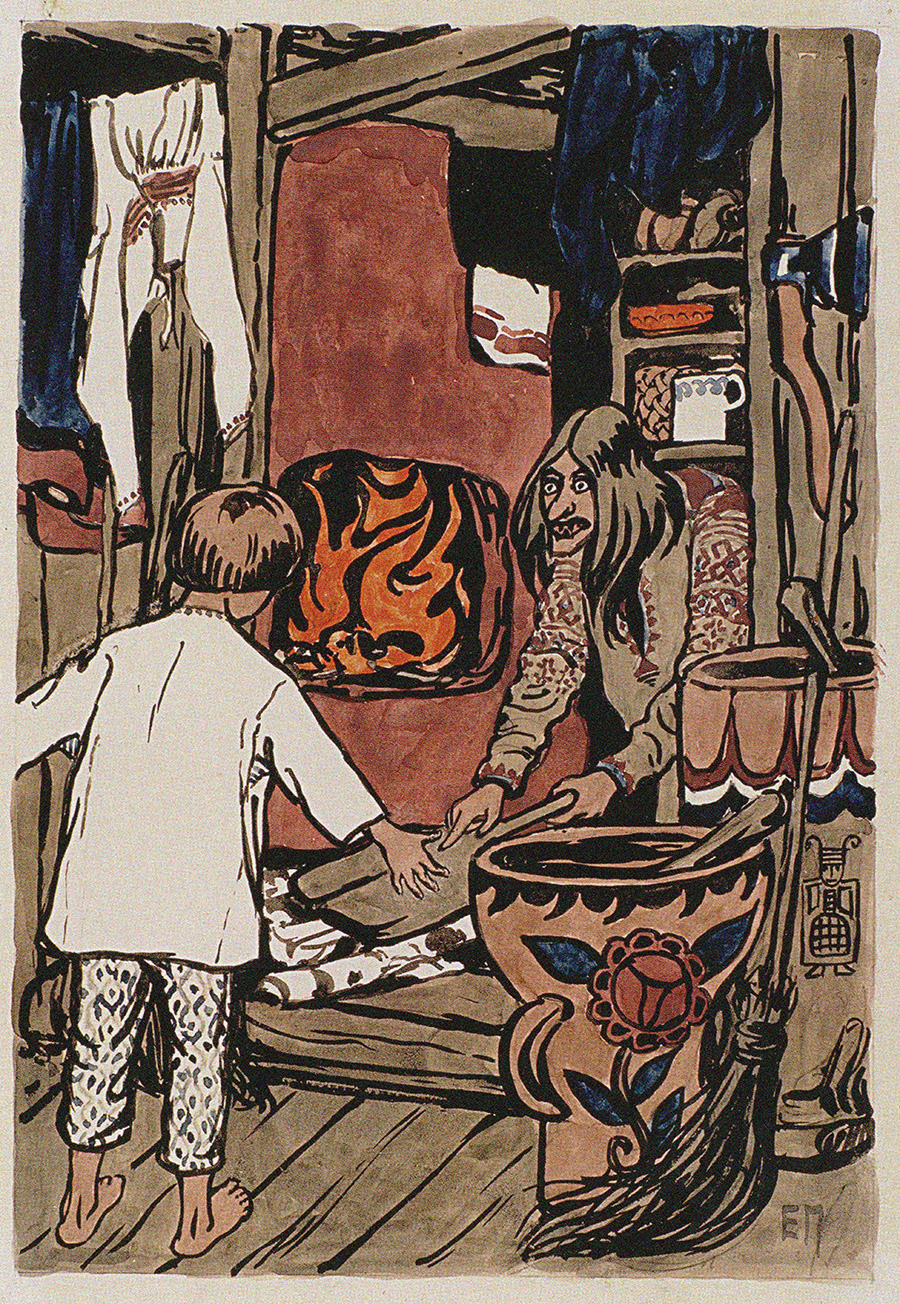 State Tretyakov Gallery, Moscow
‘Baba Yaga’ often attempts to roast the hero in the stove oven. The roots of this fairy tale ritual go back to the folklore ritual of "perekacheniye" (rebaking) of a sick baby. The child was placed in a warm oven on a bread shovel, simulating a second, healthy birth. In the fairy tale, this rite becomes a trial by fire, which the hero must endure to become stronger.
The Fool's Place of Power
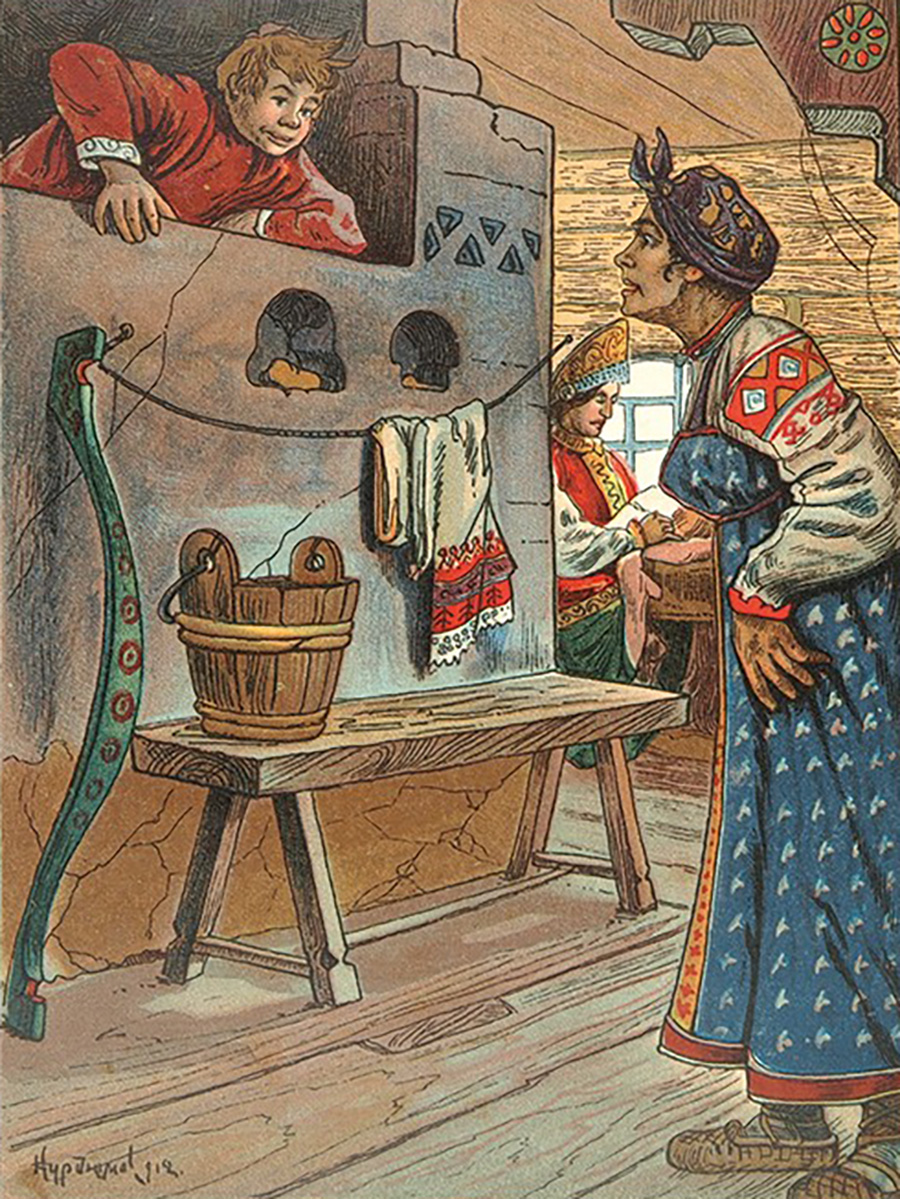 Emelya
The foolish hero (Ivanushka, Emelya) lies on the stove for years. However, the stove ultimately helps him. Why? In this case, the stove acts as a sign of social passivity, marking the hero as someone "out of this world", which ultimately turns into wisdom and a connection with miraculous powers. In the fairy tale ‘By the Pike's Command’, the stove becomes a magical means of transport, delivering Emelya straight to the king. Another example is the hero Ilya Muromets, who sat on (or near) the stove for 33 years, because he was paralyzed and then gained remarkable strength.
It turns out that the stove in Russian fairy tales is a universal and multifaceted image. It unites the everyday and the miraculous, everyday life and myth. It’s a protector, a portal between worlds, and a purifying fire.