
5 groups of co-authors in Russian literature
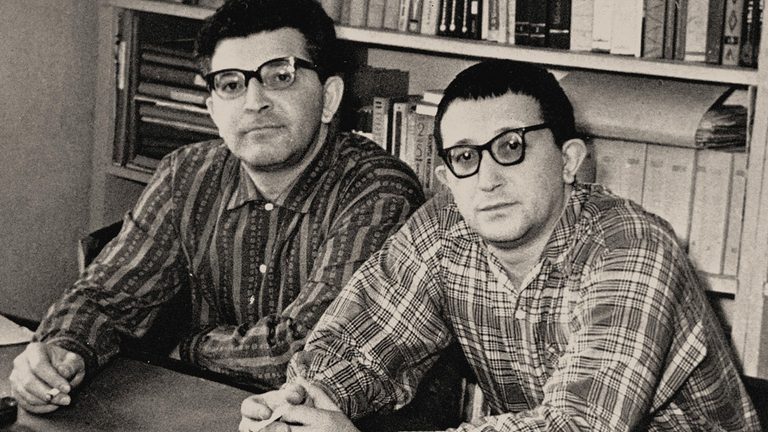
How did literary teams work? Who came up with the plots and who was responsible for the style?
Ilya Ilf & Yevgeny Petrov
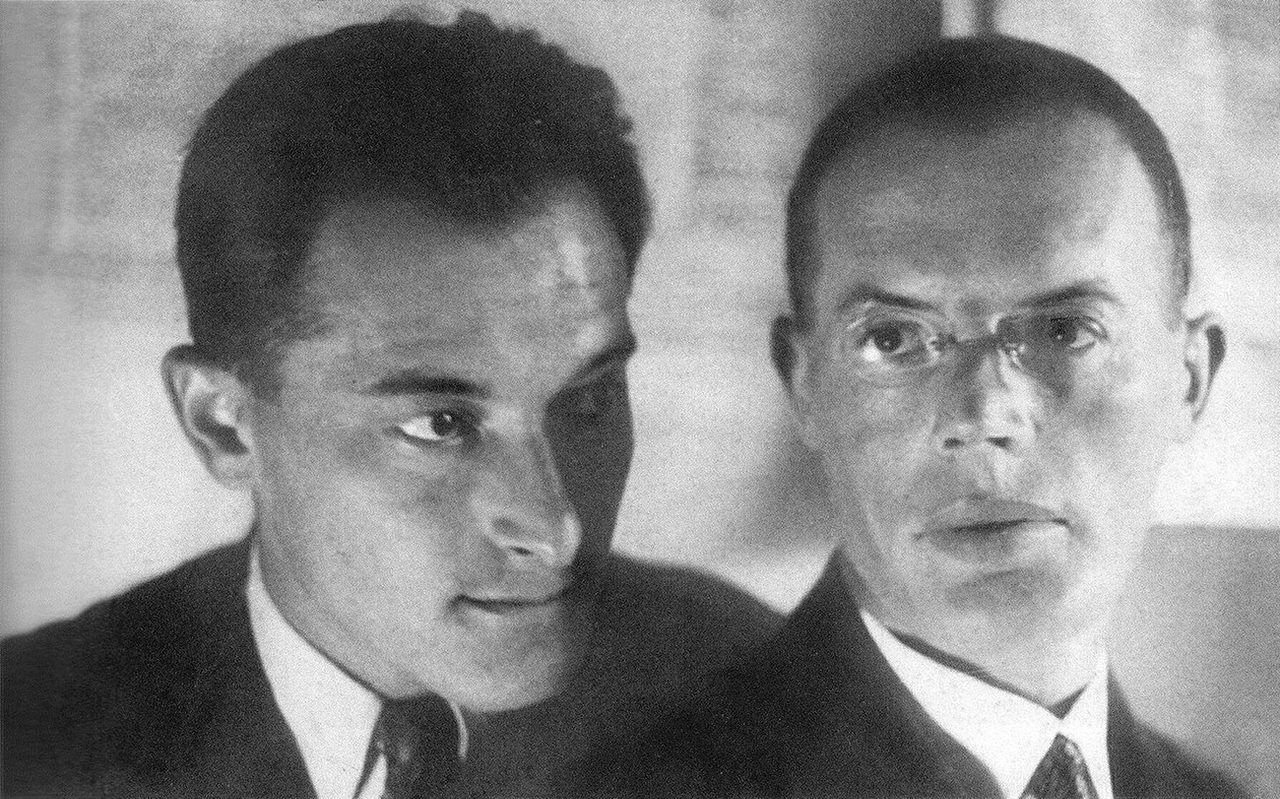
One of the most striking and harmonious duos. Both writers were born in Odessa, but their paths crossed in Moscow in the 1920s. They met at the editorial office of the ‘Gudok’ newspaper. Yevgeny Petrov's older brother, the then already famous writer Valentin Katayev, invited the young journalists to become his “literary slaves”. He gave them an idea for a novel – the search for diamonds sewn into a chair – and they were to write the text, which Katayev would then edit with his masterful hand. However, when ‘The Twelve Chairs’ was finished in 1928, Kataev realized there was nothing to edit. He had before him a finished, original and incredibly funny work. He insisted that the novel be published under the names of its original authors.
In 10 years of working together, Ilf and Petrov did not produce many major works, but each one was an event. The novel ‘The Golden Calf’, a sequel to The Twelve Chairs and the adventures of the protagonist, Ostap Bender, published in 1931, became no less popular. In 1936, ‘One-Story America’, a documentary book about a journey through the United States full of keen observations and light humor, was released. Their collaboration ended in 1937, when Ilya Ilf died of acute tuberculosis.
Brothers Arkady & Boris Strugatsky
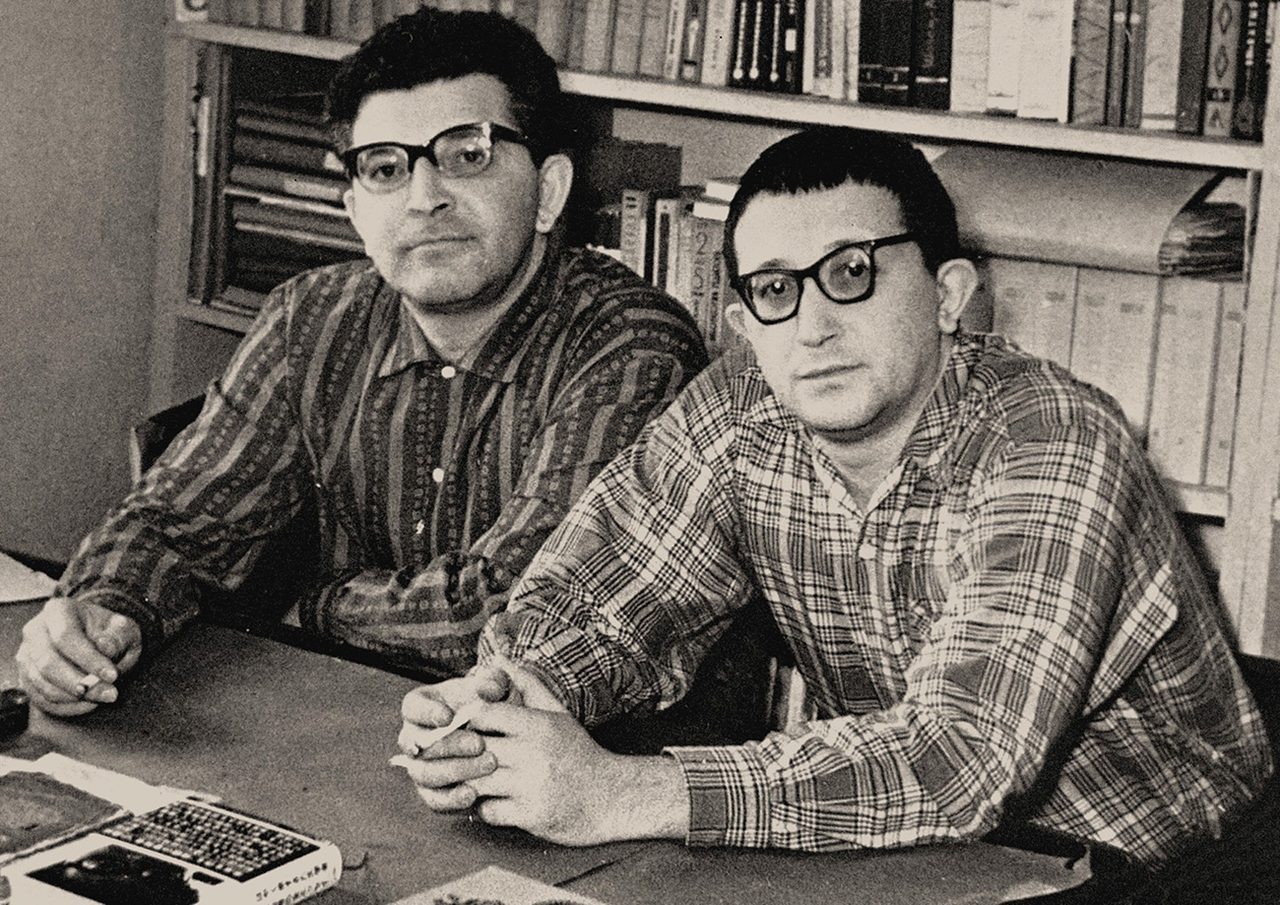
Famous classic writers of science fiction and social science fiction, whose books have sold over 40 million copies. They are brothers, but they couldn't be more different in terms of temperament and way of thinking.
The older brother, Arkady, a translator, began writing before the war. Boris, an astronomer by training, also tried his hand at literature. Their collaboration was born out of a bet. According to recollections, the brothers bet Arkady's wife Elena that they could write a good science fiction work. The prize was a bottle of champagne. Thus, in 1957, their first joint book appeared – the novel ‘The Land of Crimson Clouds’, which marked the beginning of the duo.
It’s noteworthy that for most of their time working together, the brothers lived in different cities: Arkady in Moscow and Boris in Leningrad (now St. Petersburg). Distance became a feature of their writing method. They regularly got together to work: It’s noteworthy that for most of their time working together, the brothers lived in different cities: Arkady in Moscow and Boris in Leningrad (St. Petersburg). Distance became a feature of their writing method. They regularly got together to work: in creative retreats (in Komarovo, Repino and Gagra) and at their parents' apartment in Leningrad. In between meetings, they kept up an active correspondence.
Like Ilf and Petrov, the Strugatskys discussed every sentence until they were both happy with it. Still, each had his own style. Arkady was more emotional: he generated ideas and composed lively dialogues. His experience as a translator (he knew English and Japanese) and his love for Hemingway and Bulgakov enriched his style.
Boris ensured scientific accuracy and brought irony, philosophical depth and coherence to the texts. In 1991, Arkady passed away. The brothers had an agreement: if one of them decided to publish alone, he would do so under a pseudonym. After his brother's death, Boris took the pseudonym ‘S. Vititsky’.
Brothers Arkady & Georgy Vainer
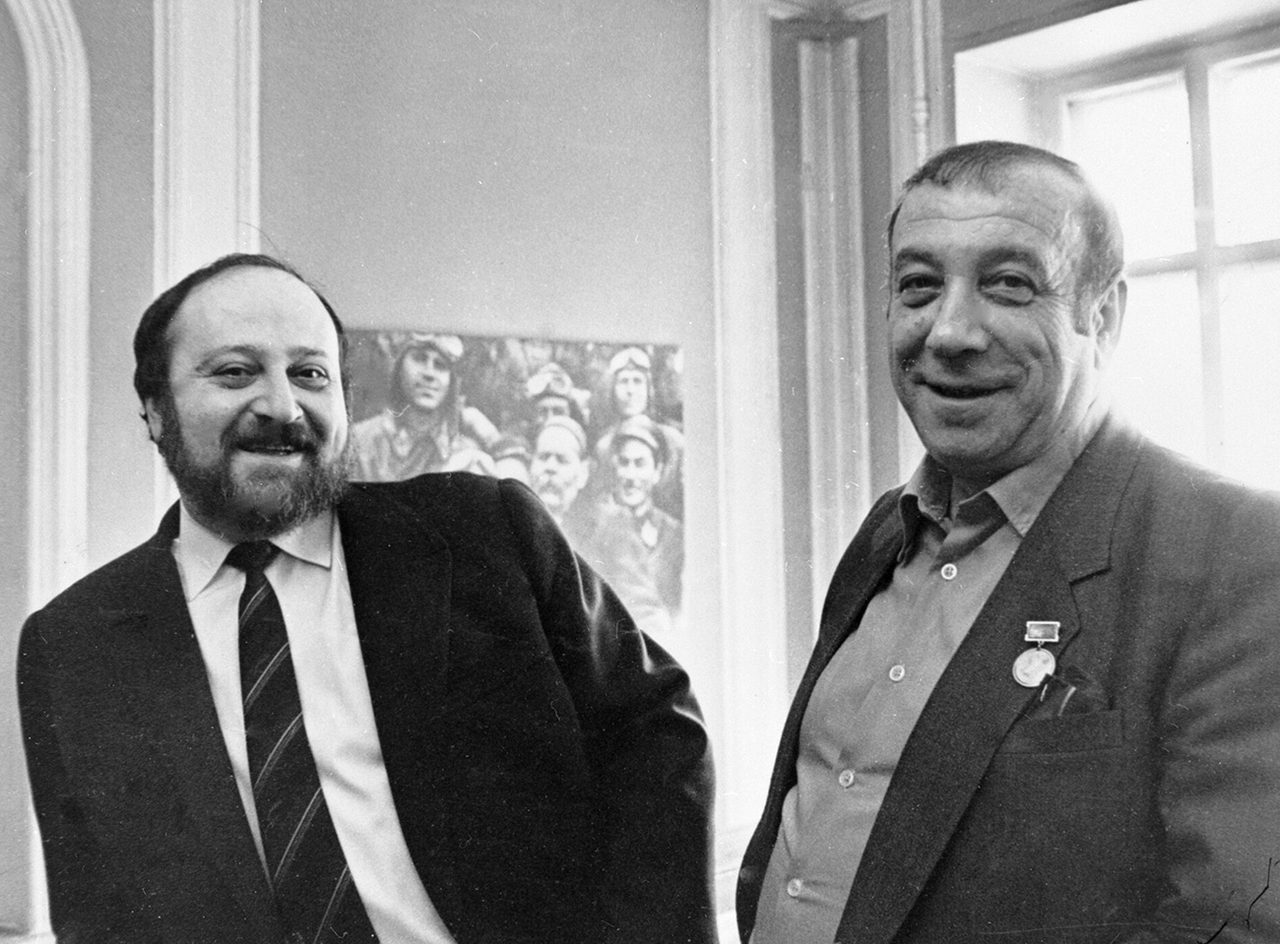
The luminaries of Soviet detective fiction. A pair whose investigative experience was combined with journalistic skill. As a result, they created not only exciting plots, but also a gallery of vivid, memorable characters.
Like the Strugatsky brothers' collaboration, their writing career began with a bet. In 1967, a mutual acquaintance bet the brothers that they could not write a detective story. By that time, Arkady had already worked for more than 10 years in the Moscow Criminal Investigation Department (‘MUR’) and had risen to the rank of head of the investigation department. As a result, the brothers based their story on a real criminal case from their practice. The story ‘The Watch for Mr. Kelly’ was soon published in two magazines, ‘Soviet Militia’ and ‘Our Contemporary’.
Work on the book began with a detailed plan and discussion of the details. The secret of their success was their perfect complementarity. Each brother had his own “element”. Working at the ‘MUR’ gave Arkady unique knowledge of police work, the psychology of criminals and investigators. He brought authenticity and factual accuracy to the novels. Georgy was a journalist and was responsible for the literary editing of the text.
The Vainer brothers co-authored more than 150 works and 22 movie scripts. In 1975, their most famous novel, ‘The Era of Mercy’, became an absolute bestseller and formed the basis for the movie ‘The Meeting Place Cannot Be Changed’ (1979). Their collaboration lasted for almost three decades. It became difficult to work together when Georgy Vainer emigrated to the United States in 1990, where he took up journalism.
Kozma Prutkov
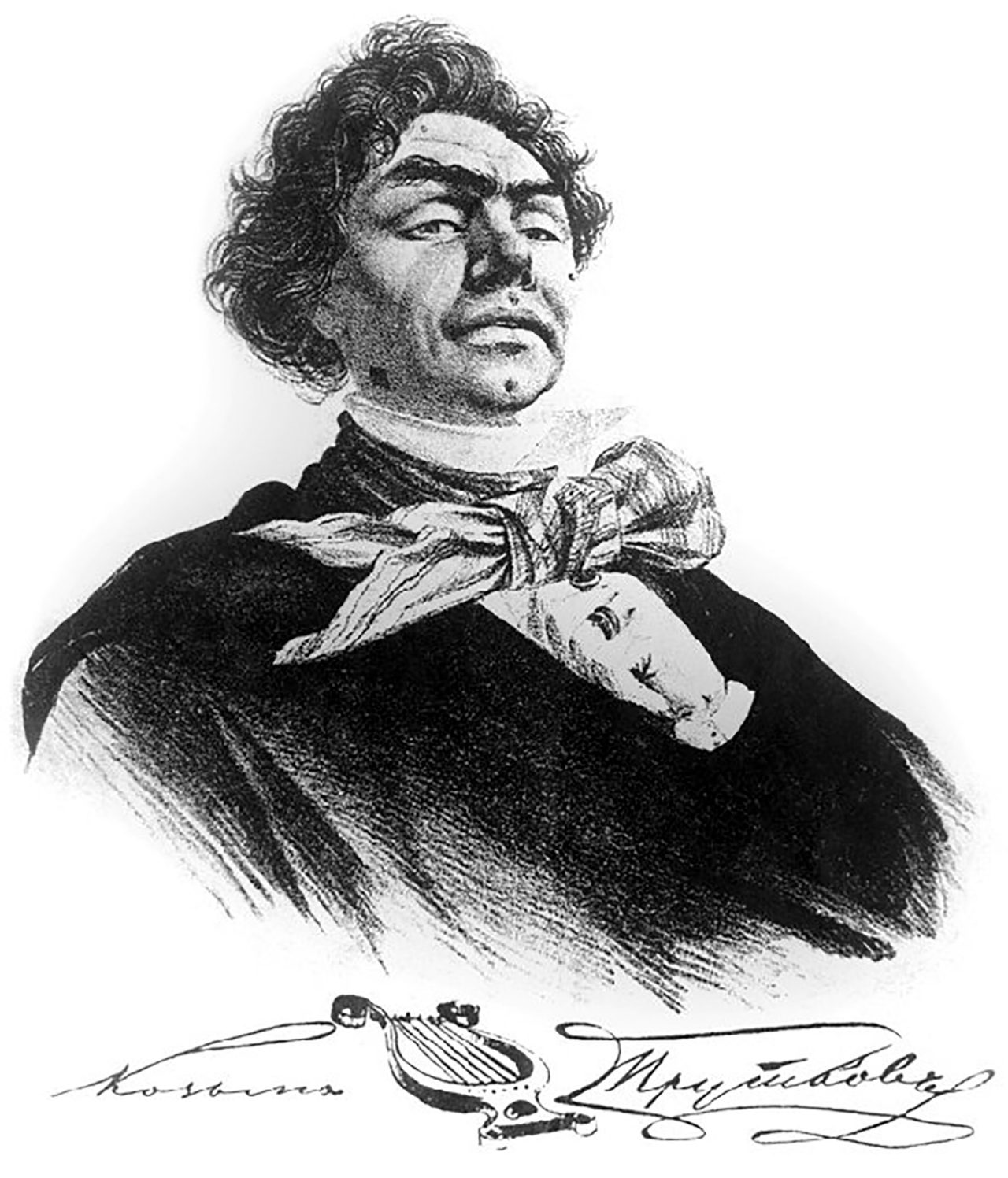
The most entertaining hoax in Russian literature. It’s not just a pseudonym, but a fully-fledged image of a fictional writer with his own biography, character and even portrait.
Kozma Petrovich Prutkov is the collective creation of the most talented people of his time: Count Alexei Konstantinovich Tolstoy and the young aristocrats and wits, the Zhemchuzhnikov brothers – Alexei, Vladimir and Alexander. Later, when the image had already taken shape, other writers sometimes joined in the writing.
It all started as a joke. In Summer 1851, at the Zhemchuzhnikov Estate, a group of young people entertained themselves by writing parody fables. This gave rise to the idea of publishing them under the name of a fictional author. And that’s how ‘Kozma Prutkov’ was born. Incidentally, his name was taken from the Zhemchuzhnikovs' valet, who received 50 rubles for this. Prutkov was given a detailed, recognizable biography: his year and place of birth, service in a hussar regiment, rank and death from a stroke.
Under Prutkov's name, many works were created in a variety of genres: poems and fables, aphorisms (many of which became famous) and plays.
25 Soviet Writers
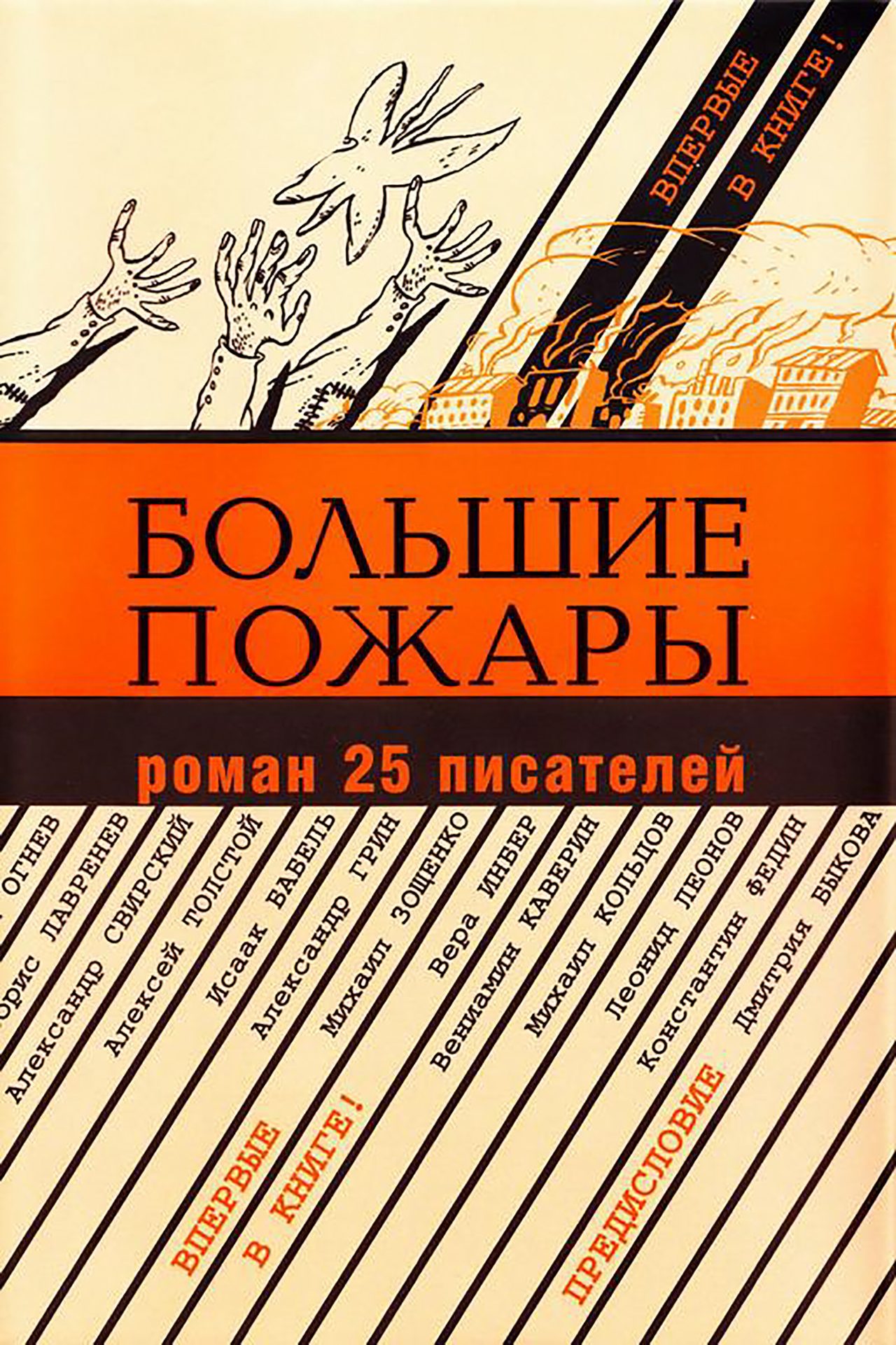
A unique experiment in Russian literature: one novel was written by 25 authors at once. The book ‘Big Fires’, released in 1927, was conceived by the editorial staff of the ‘Ogonek’ magazine. Each author was asked to write their own chapter, continuing the plot of the previous one.
The action takes place in the 1920s in the city of Zlatogorsk, where mysterious fires begin to occur one after another. A correspondent for the local ‘Berloga’ newspaper and his acquaintance, a modest court clerk named Varvi Migunov, try to find the cause of the fires.
Twenty-five writers took part in writing the burima novel, including Alexander Grin, Isaac Babel, Mikhail Zoshchenko, Alexei Tolstoy, Veniamin Kaverin and many others. The novel did not become a masterpiece, but it remained a vivid monument to the literary life of the 1920s.
The novel was published in every issue of ‘Ogonyok’ in 1927. Critics and literary scholars describe it as a bizarre mixture of genres: adventure, detective, spy, fantasy and satire all at once.