
Why did every Russian girl dream of working as a ‘lady-in-waiting’?
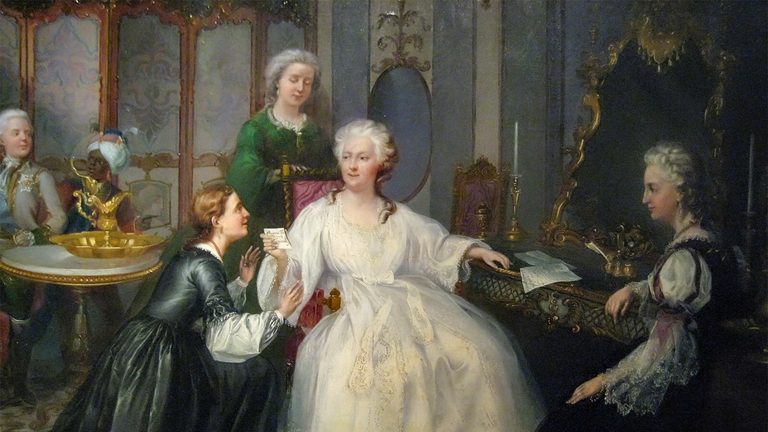
Behind the outward splendor lay the Spartan daily routine and hard work of women born into noble families.
A diverse staff of female servants to the tsarina existed in Old Russia long before the position of ‘maid-in-waiting’ was established. True, court boyars were usually no longer young or unmarried, but they, too, were recruited from noble families. Their responsibilities were quite extensive: they managed the female half of the tsar's palace, oversaw the treasury, handicrafts and the tsarina's bedchamber. And their annual salary significantly exceeded that of ordinary male servants. The position of ‘freilin’ (from the German word ‘Fräulein’, meaning ‘maid of honor’) was officially established in Russia in the first quarter of the 18th century by Peter the Great. Only unmarried women, often young members of noble and high-ranking families, could become ‘maids of honor’.
Peter the Great's ‘Table of Ranks’ mentioned five ranks strictly reserved for women: the ‘Oberhofmeisterina’ (‘grand mistress of the court’) held the rank above all other ladies, followed by the ‘hofmeisterina’ (‘mistress of the court’), ‘stats-dama’ (‘lady-in-waiting’), ‘kamer-freilin’ ‘chambermaid’ and ‘freilin’ (‘maid of honor’). Under Nicholas I, the salary of a ‘maid of honor’ was 600 rubles per year, while that of a lady-in-waiting of the chamber was 1,000. However, the truly valuable part of their work were the gifts: the empress could reward her favorites with jewelry or expensive souvenirs.
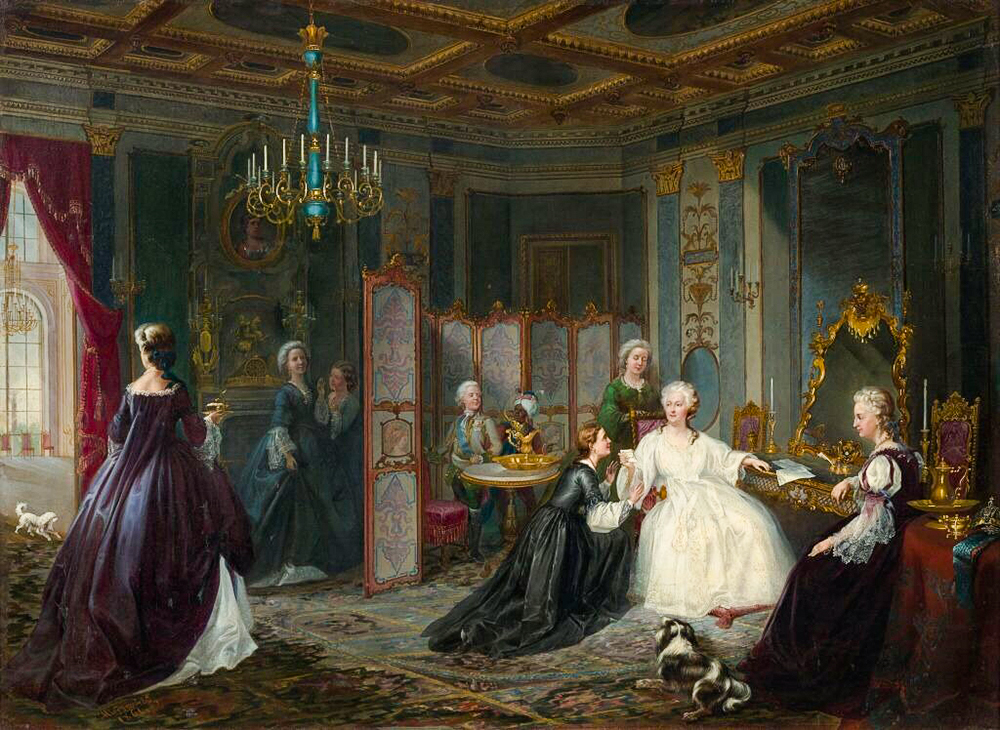 Catherine II
The requirements for maids of honor were strict: impeccable manners and a perfect knowledge of etiquette (for example, how many steps to take at a reception or to whom and how deeply to bow). A broad education and knowledge of palace gossip were equally highly valued. As for appearance, royal women typically preferred intelligent, but plain women. Beauties among the ladies in waiting were generally chosen at the emperor's behest, especially if he had an affair or romantic relationship with them. Nicholas I and Alexander II had long-standing affairs with their ladies in waiting.
Ladies-in-waiting were on duty with their mistresses for a week: they attended their morning toilets, accompanied them on walks, read and entertained guests with conversation. Their duties ranged from writing letters and running errands to fulfilling the royal person's slightest whim. Their day began at 6 am and ended late in the evening, with weekends being optional.
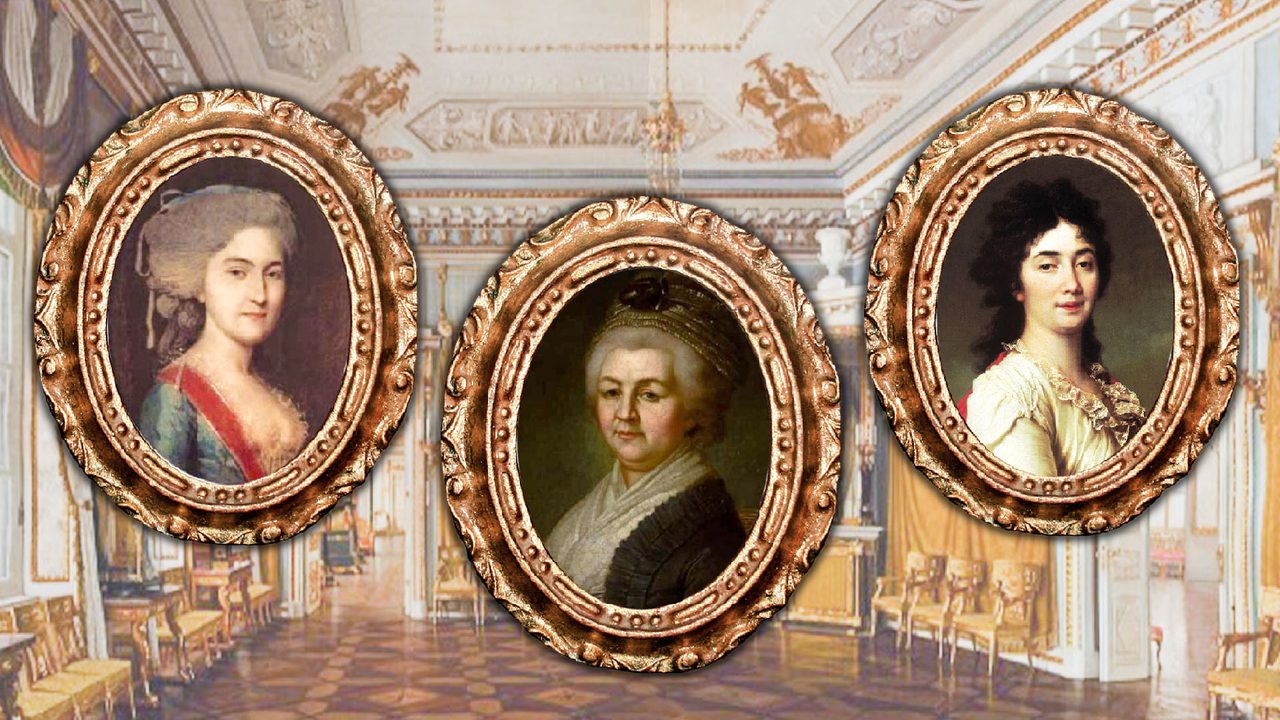 Favorites Anna Naryshkina, Maria Perekusikhina, Anna Protasova
Despite the hardships, the position was extremely prestigious. It opened the door to a brilliant match, as a lady-in-waiting constantly mingled in high society. She also received a substantial dowry from the treasury.
The cut of the maid of honor's dress (the ‘Russian style’ with a bodice and train) was established by decree of Nicholas I in 1834. The color denoted status: green for ladies-in-waiting, burgundy for the empress' maids of honor and azure blue for the grand duchesses' maids of honor. A distinctive mark was also the "cipher" – a gold monogram adorned with diamonds bearing the initials of the lady in whose service the maid of honor served. It was worn pinned to a blue ribbon on the left chest.
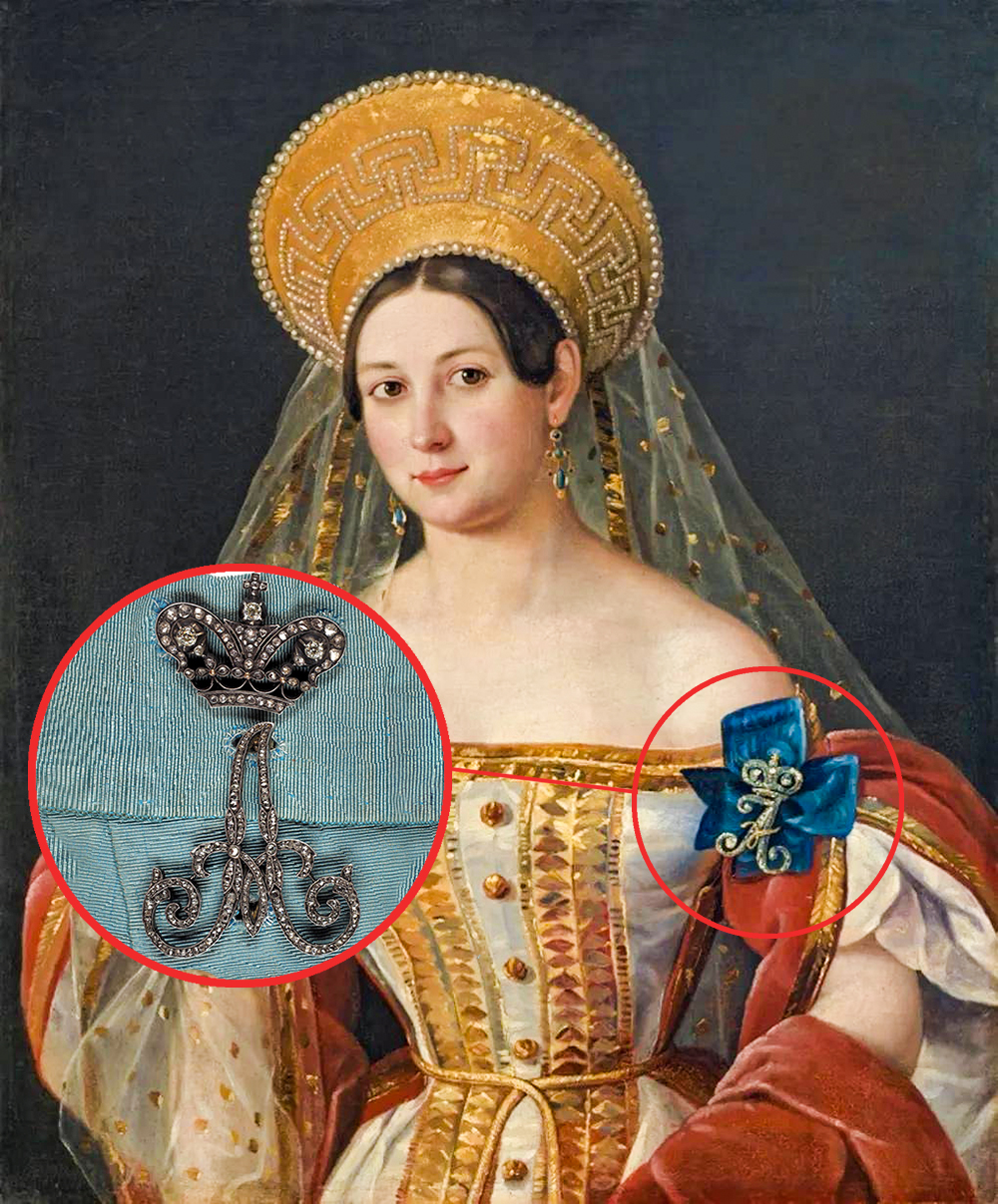 Pimen Orlov. Cipher and "Portrait of Maid of Honor Sofya Vasilyevna Orlova-Denisova"
Many maids of honor also became close friends and confidantes of the empresses. This brought another advantage to the position: influence at court due to their closeness to the imperial family. Catherine II was renowned for her close relationships with her ladies-in-waiting: Maria Perekusikhina was constantly at the empress' side, assisting her with everything from morning and evening attire to advice on a wide range of topics; Anna Naryshkina strictly guarded her love affairs and assisted her in all her amorous affairs; and Anna Protasova oversaw the staff of ladies-in-waiting and pages, keeping the structure running like clockwork.
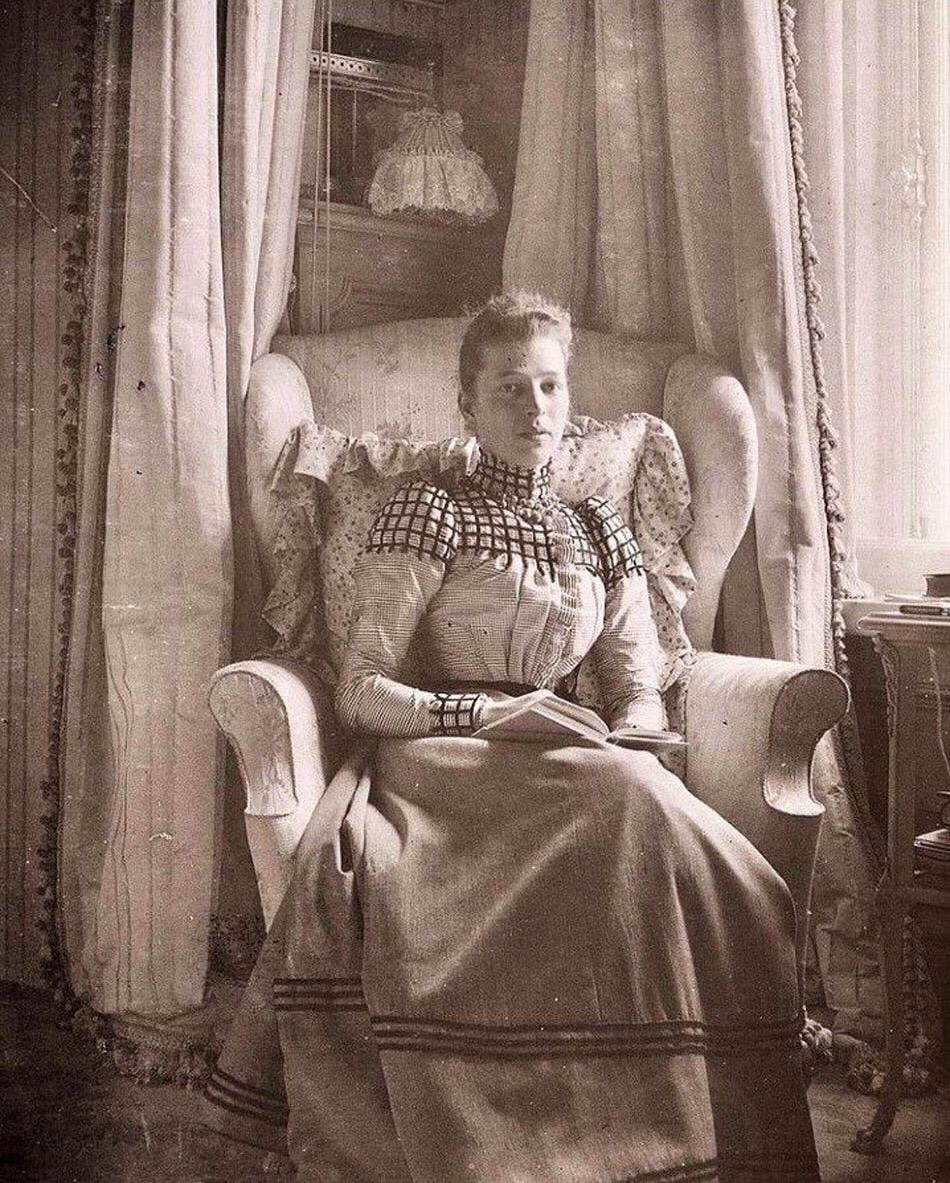 Sonia Orbeliani in the Mauve Room of the Alexander Palace
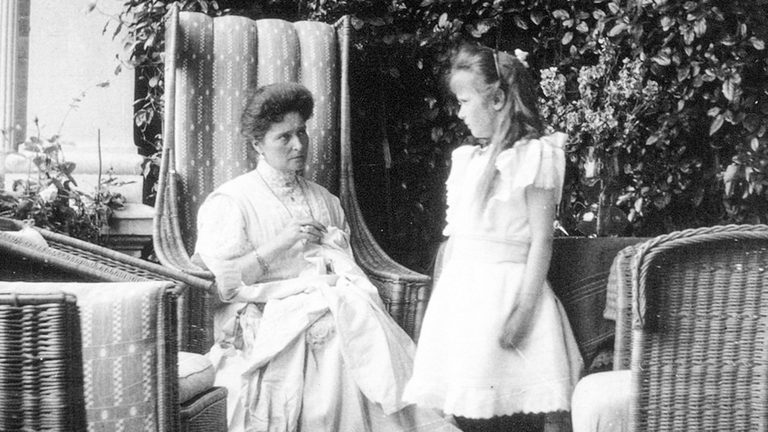
There are also examples of empresses who devoted themselves to their ladies-in-waiting, literally until death. For example, when Sofia Orbeliani, a lady-in-waiting to Alexandra Feodorovna, the last Russian empress, fell seriously ill, she housed her in the palace, paid for her treatment and even ordered a special carriage for travel. After Orbeliani's death, Alexandra Feodorovna personally organized the funeral.
The institution of ladies-in-waiting ceased to exist after the 1917 Bolshevik Revolution, along with the monarchy.