
A VISUAL history of 18th-century Russia (PICS)
From the beginning of the Great Northern War against Sweden to the reign of Catherine the Great.
1. Alexander Kotzebue. ‘Battle of Narva’, 1850
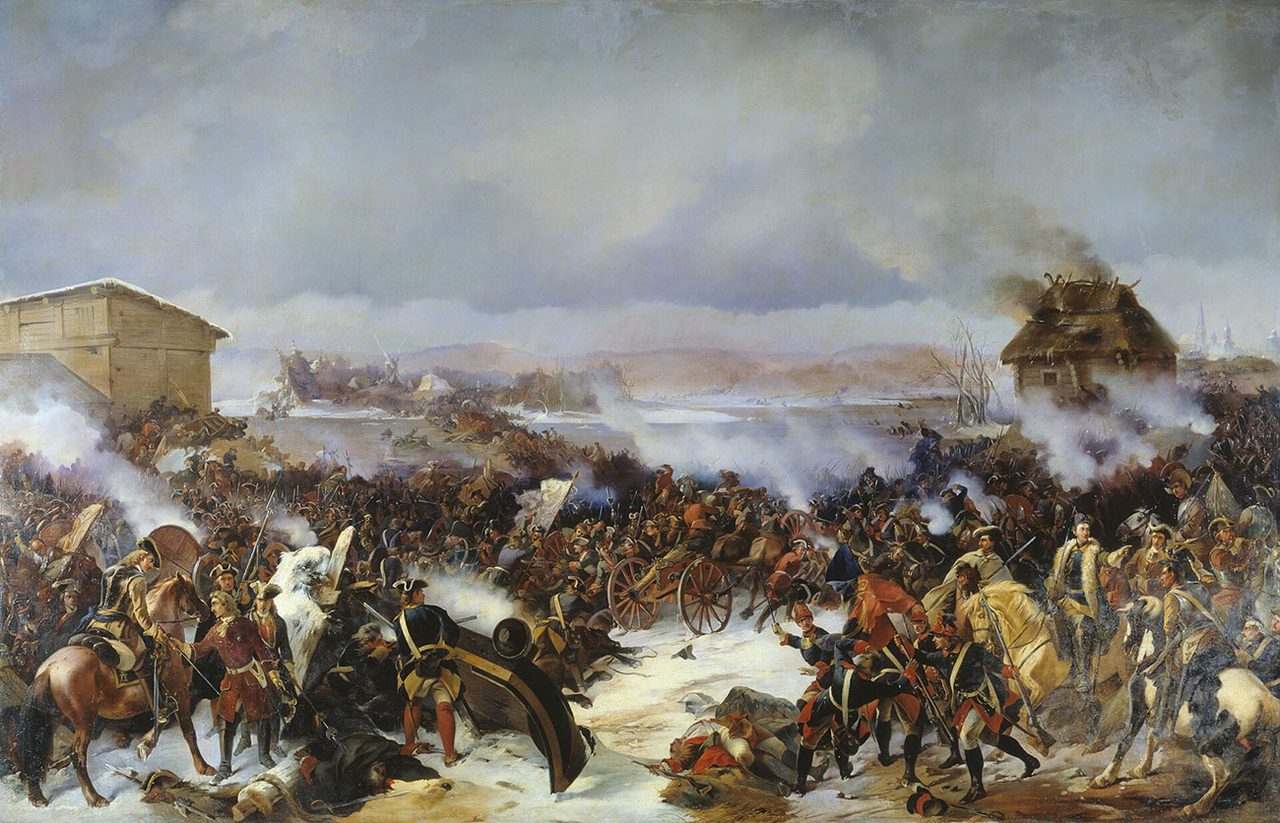
In 1700, Russia, Denmark, Saxony and the Polish-Lithuanian Commonwealth challenged powerful Sweden, which had come to dominate Northern Europe single-handedly and had effectively turned the Baltic Sea into its own lake. However, the outbreak of the Great Northern War proved disastrous for the allies, as King Charles XII dealt them a series of crushing blows.
The Russians suffered a crushing defeat at Narva, but their struggle did not end there. Tsar Peter I merely accelerated the reform of the state system, the modernization of the army along European lines and the creation of a regular navy.
2. Nikolai Dobrovolsky. ‘Here a City Will Be Founded’, 1880
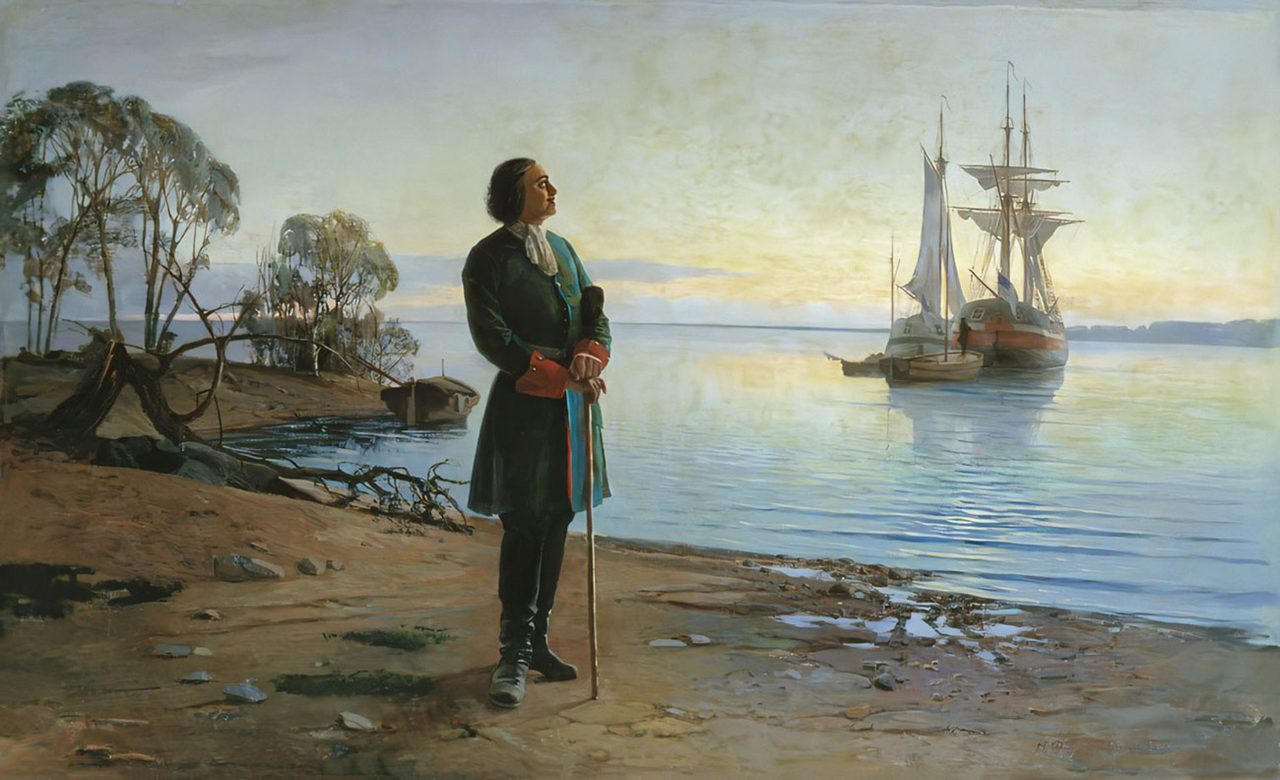
In 1703, Russian troops recaptured Ingria, the southern coast of the Gulf of Finland lost to the Swedes in the 17th century. Peter the Great ordered a fortress to be built there, which a few years later was named St. Petersburg. A city quickly grew around it and, in 1712, the tsar moved the state capital there.
3. Alexander Kotzebue. ‘Victory at Poltava, June 27, 1709’, 1864
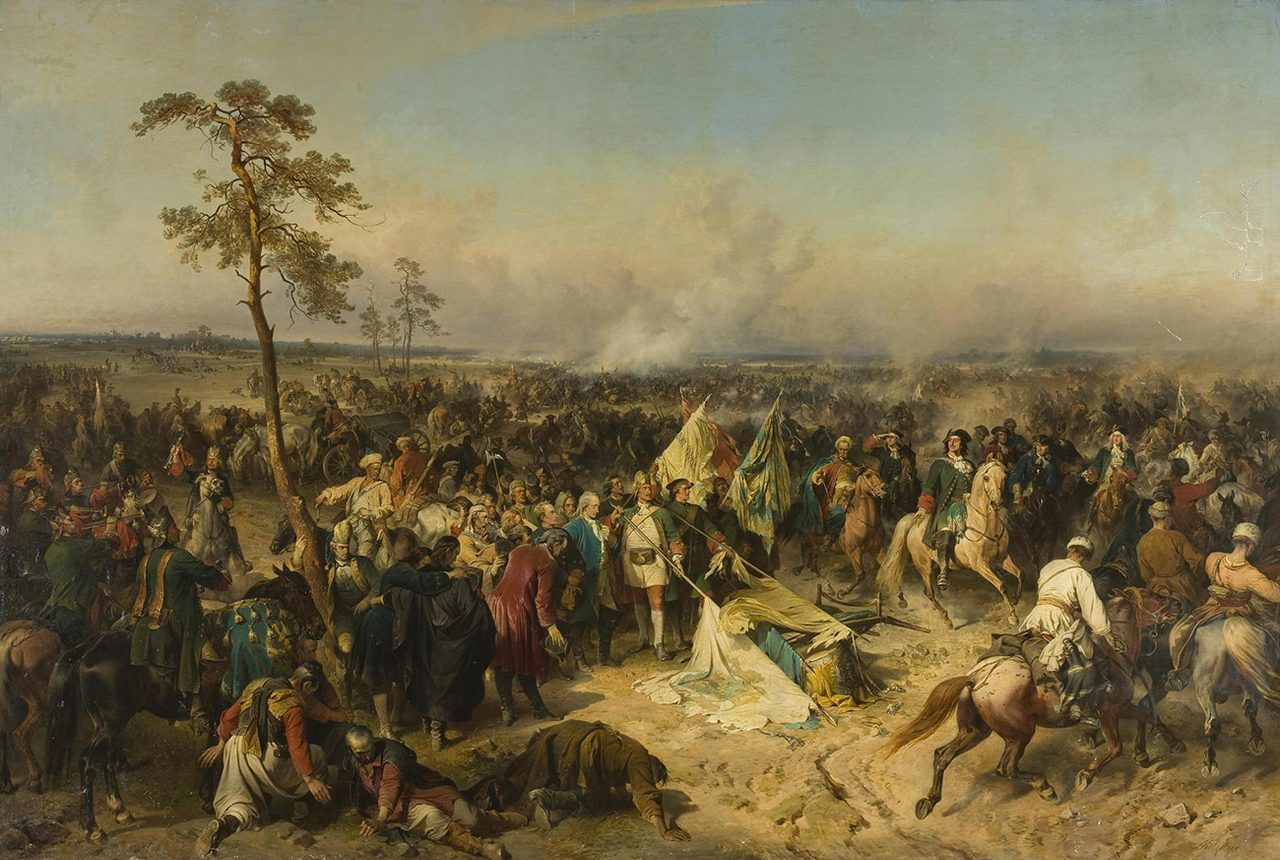
The Battle of Poltava on July 8 (according to the Gregorian calendar) 1709 marked the climax of the Great Northern War. The resounding victory of the Russian forces effectively decided the outcome of the entire conflict, although hostilities continued for another twelve years.
Under the terms of the Treaty of Nystad in 1721, Russia acquired Livonia, Estland, Ingria (the territories of modern-day Latvia, Estonia and Leningrad Oblast/Region) and part of Karelia. That same year, Peter I assumed the imperial title and the country became an empire.
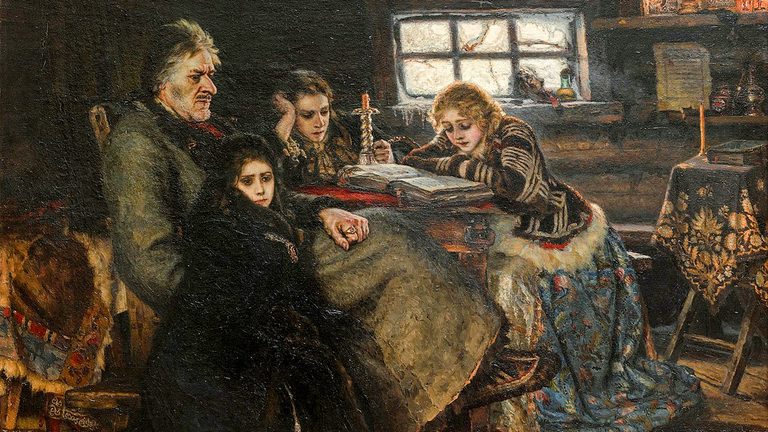
4. Vasily Surikov. ‘Menshikov in Berezovo’, 1883
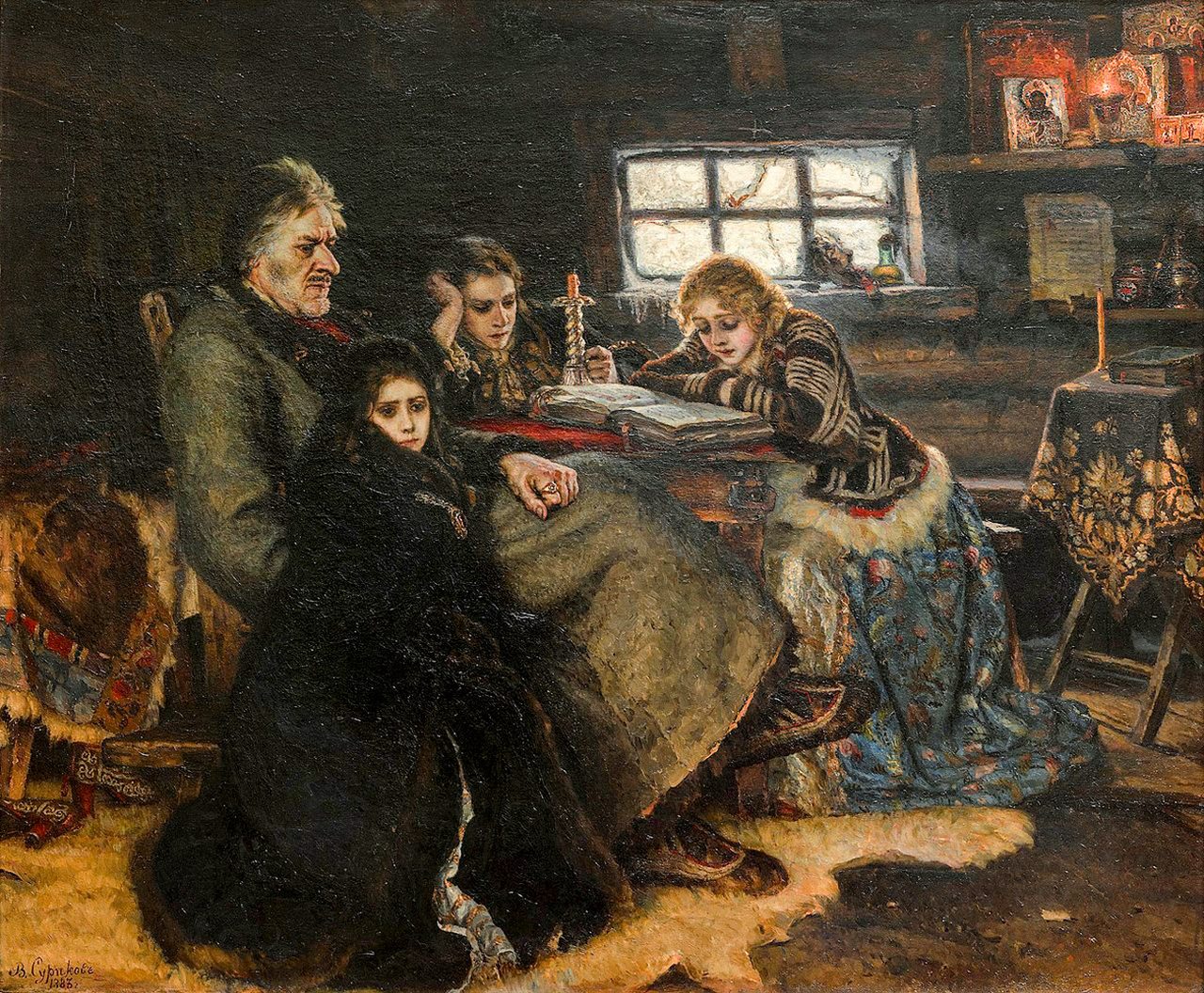
Peter I, who died in 1725, left no heir and did not specify in his will who should inherit power. The Age of Palace Coups began in Russia – political groups and factions began to compete for power among themselves, overthrowing some rulers and installing others in their place.
One of the most important figures in the first years following the emperor's death was Alexander Menshikov, his closest associate, a batman of the tsar who rose to become a 'Prince of the First Rank'. He effectively ruled the country during the reign of Catherine I from 1725 to 1727 and continued to hold a high position under Peter II, Peter I's grandson, who succeeded the throne. However, he was soon removed from power, stripped of his property and exiled to Siberia, where he died.
5. Valery Jacobi. ‘Jesters in the Bedroom of Anna Ioannovna’, 1872
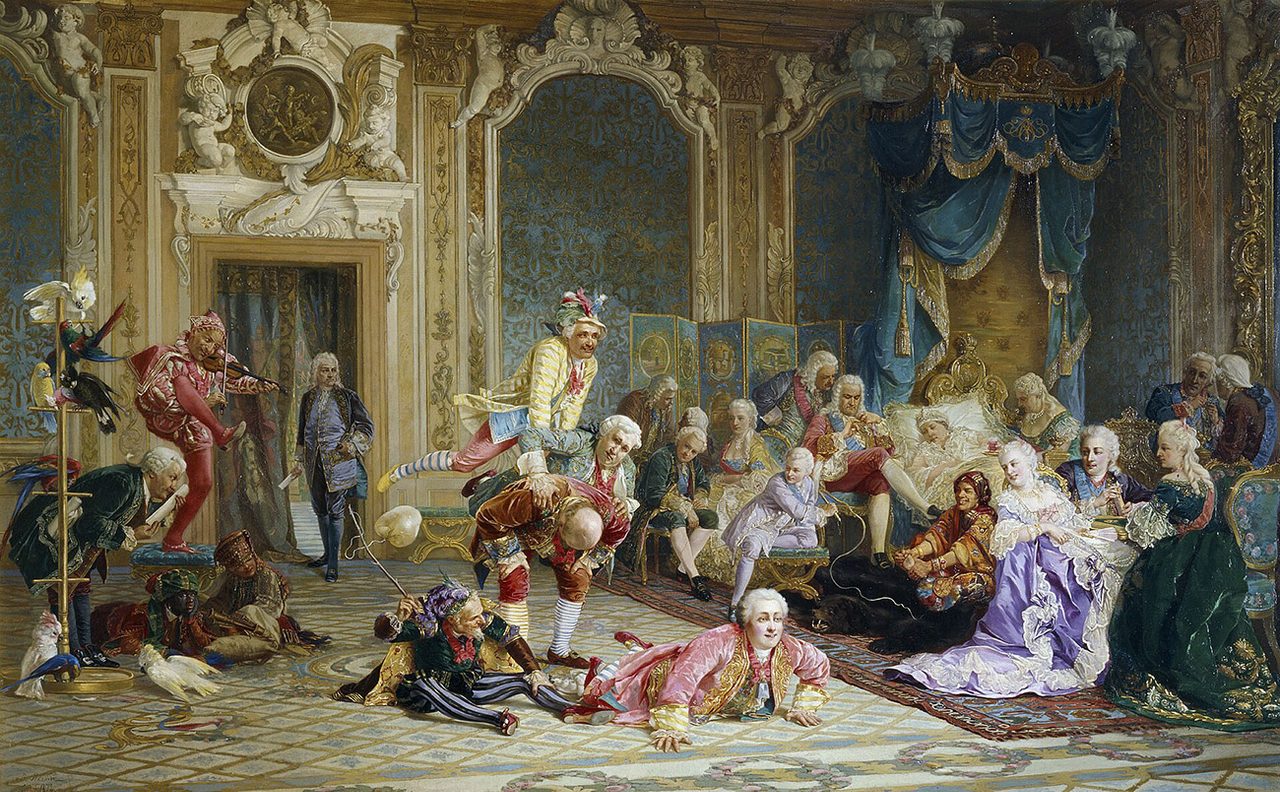
Fourteen-year-old Peter II died of smallpox in 1730 and Peter I's niece, Anna Ioannovna, ascended the throne. The empress restored absolute monarchy, limited by the Supreme Privy (Secret) Council – the empire's highest advisory government body. Ernst Johann Biron, a Baltic German, exerted a great influence on state policy during her reign.
The empress was known for her cheerful disposition, loved to surround herself with jesters and spent enormous sums on balls and all kinds of performances. "She was generous to the point of extravagance and loved pomp to the point of excess, which is why her court surpassed all other European courts in magnificence," noted Spanish diplomat James Fitz-James Stuart.
6. Ivan Tvorozhnikov. 'Mirovich Before the Body of Ivan VI’, 1884
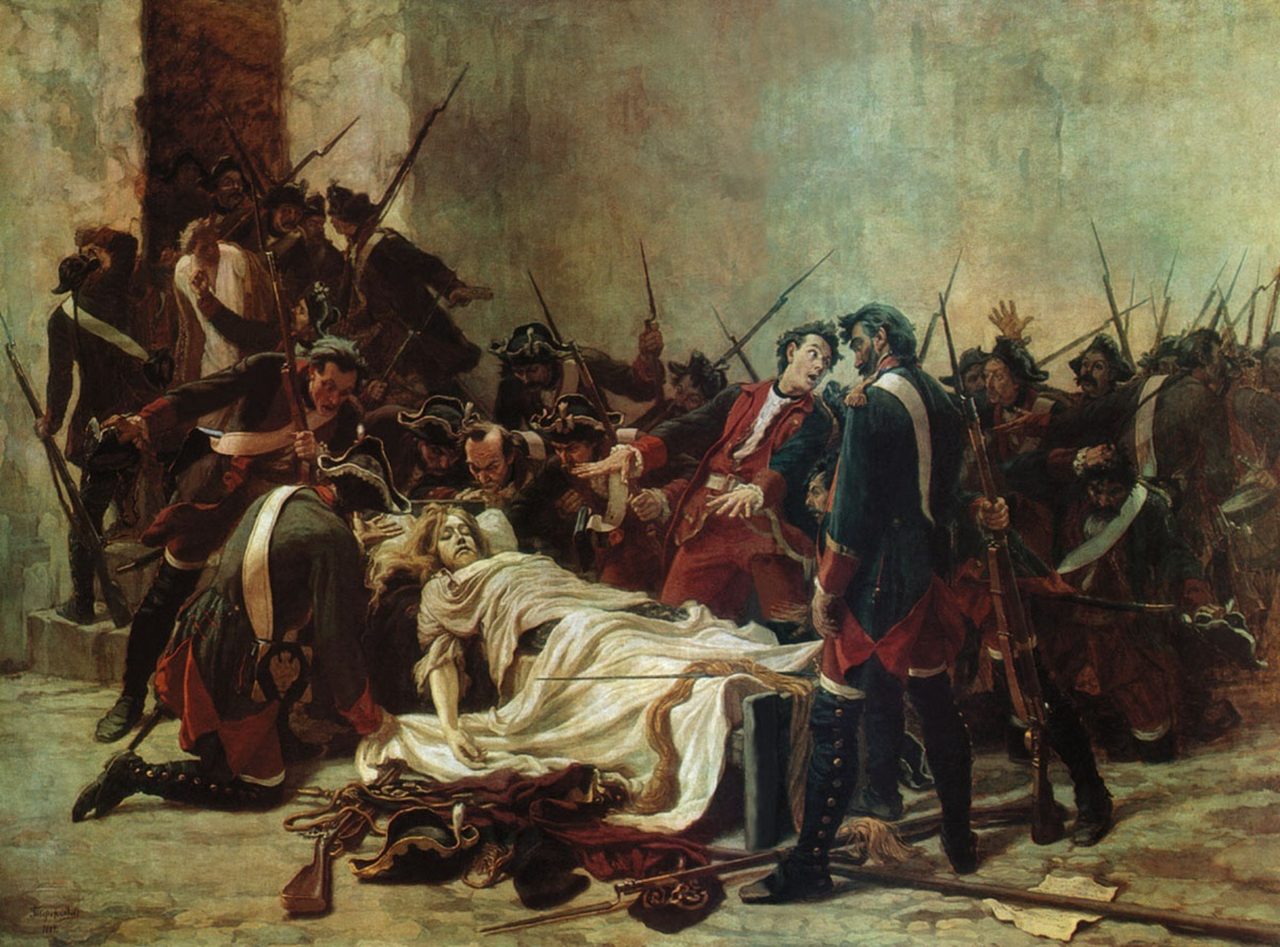
Following the death of the childless Anna Ioannovna in 1740, her two-month-old grandnephew Ivan VI ascended the throne. His regents were first Biron and then his mother, Anna Leopoldovna. However, the infant's reign was short-lived – as early as 1741, he was deposed by Peter I's daughter, Elizabeth Petrovna. Ivan spent his entire life in captivity, until, in 1764, he was killed by guards during an unsuccessful attempt by Second Lieutenant Vasily Mirovich to free him and restore him to the throne.
7. Alexander Kotzebue. ‘The Capitulation of Berlin, September 28, 1760’, 1848
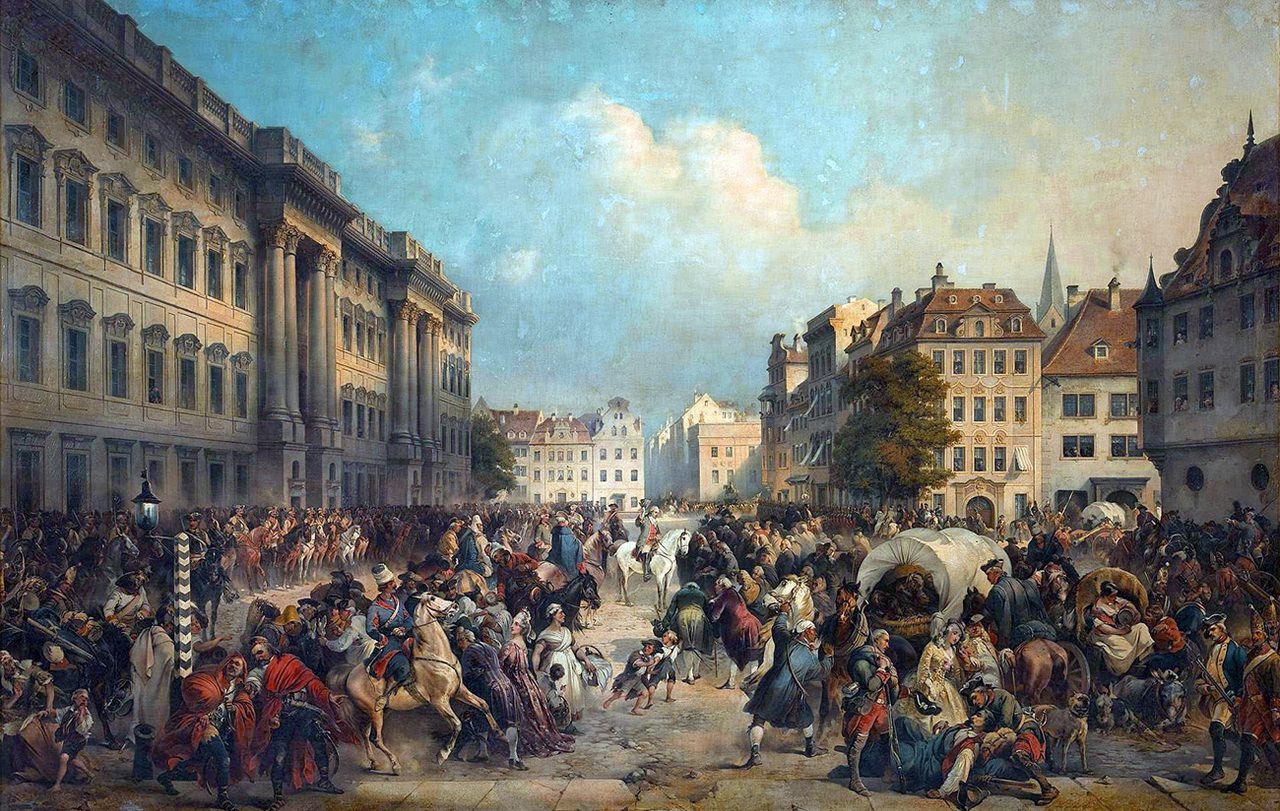
One of the most significant events during the 20-year reign of Elizabeth Petrovna was the Seven Years War (1756-1763), in which Russia faced off against Prussia. The Russian army managed to secure several victories, capture East Prussia along with Königsberg and even take Berlin.
However, the death of the empress in 1762 put an end to all this. Peter III (Duke of Holstein-Gottorp and grandson of Peter I), who ascended the throne in January, proved to be a great admirer of Prussian King Frederick the Great. He returned all Russian conquests to him and even entered into a military alliance with Prussia. In German history, this unexpected turn of events is known as the ‘Miracle of the House of Brandenburg’.
8. Joachim Kästner. ‘Catherine II on the balcony of the Winter Palace, greeted by the guards and the people on the day of the coup, June 28, 1762’, 1760s
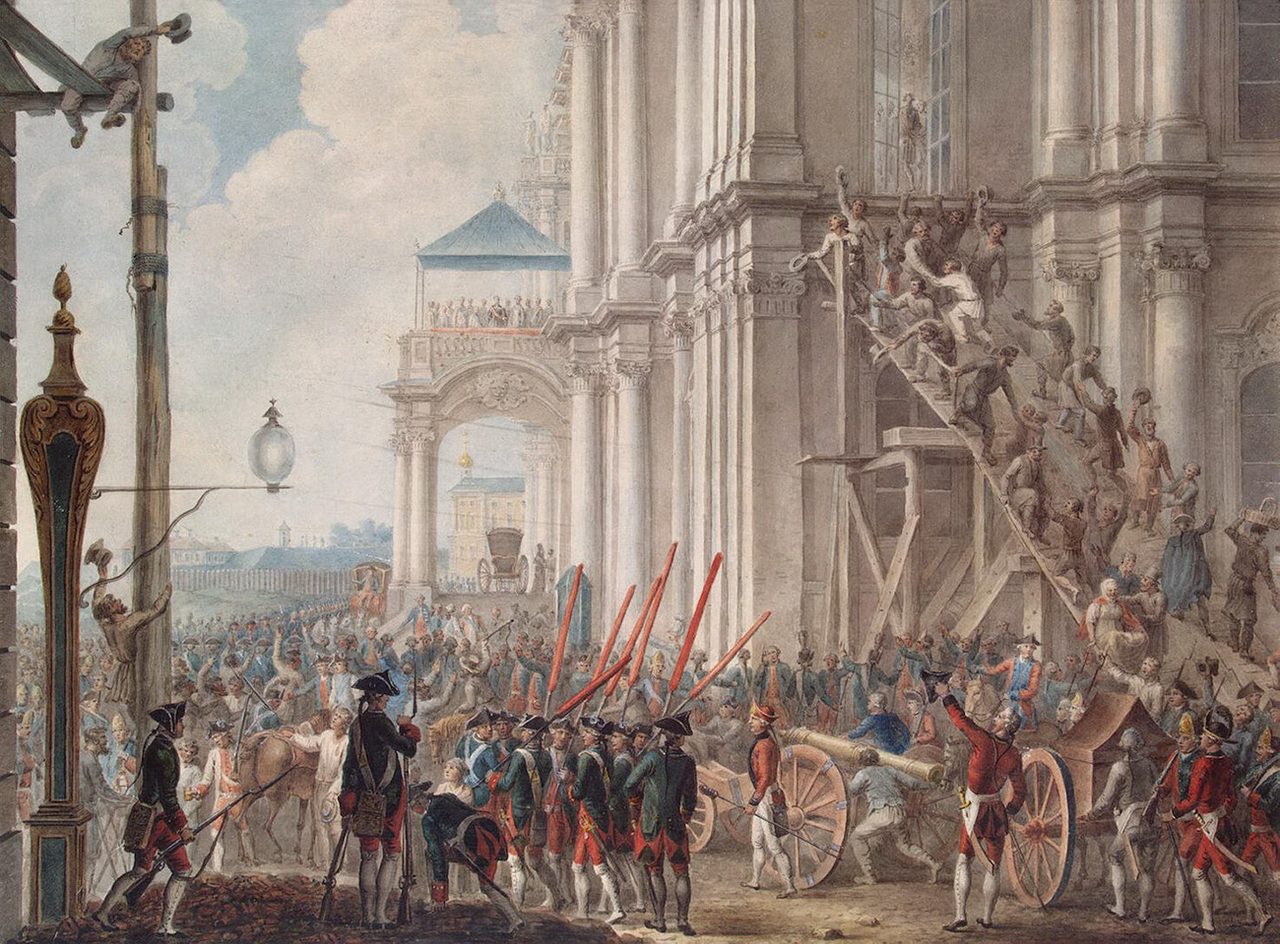
Due to Peter III's provocative foreign policy, his reign was also short-lived. On July 9, 1762, a coup took place, resulting in his wife, Sophie Augusta Frederica of Anhalt-Zerbst – the future Empress Catherine II – coming to power. The deposed monarch was imprisoned, where he soon died under unclear circumstances.
9. Ivan Aivazovsky. ‘Battle of Chesma’, 1848
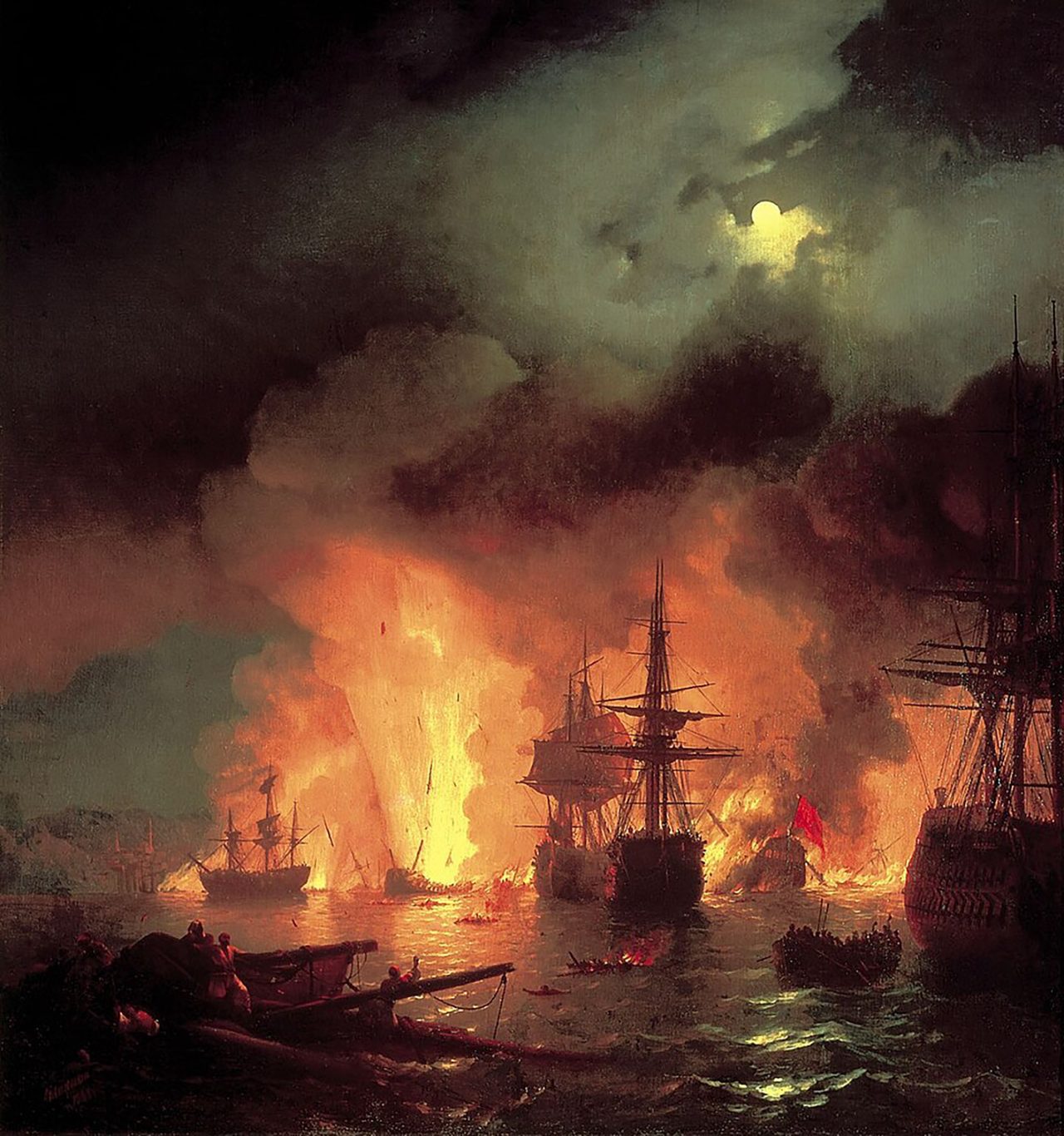
Under Catherine the Great, Russia significantly expanded its borders. In the war of 1768-1774, it defeated the Ottoman Empire. A highlight of this conflict was the Battle of Chesma, during which the Russians destroyed an entire Turkish fleet off the western coast of Anatolia with minimal losses.
As a result of the war, Russia established a foothold in the northern Black Sea region and acquired its first lands in Crimea. Istanbul lost control over the Crimean Khanate, which was formally declared independent. In 1783, it became part of the Russian Empire.
10. Jan Matejko. ‘Rejtan. The Decline of Poland’, 1866
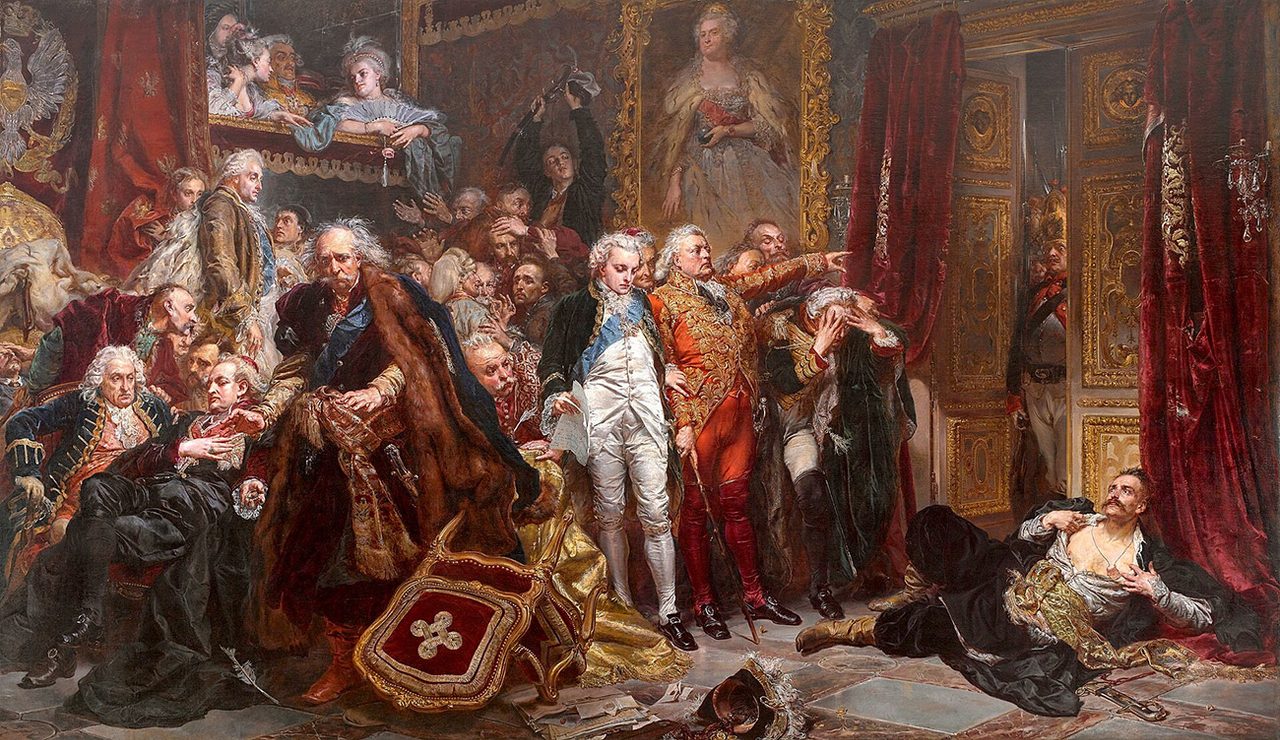
In the second half of the 18th century, the weakened Polish-Lithuanian Commonwealth became easy prey for its neighbors. In 1772, Russia, Austria and Prussia signed a convention on the cession of part of its territory in accordance with demands "as ancient as they are legitimate". The following year, at the initiative of the three powers, a Sejm convened in Warsaw to legitimize the partition. One of its participants, a nobleman named Tadeusz Rejtan, attempted to disrupt the meeting with the words: "Kill me, but do not kill the Fatherland!" but to no avail. In 1793 and 1795, two more partitions of the Polish-Lithuanian Commonwealth occurred and the country disappeared from the political map of Europe for little over a century. Russia then received the territories of modern-day Latvia, Lithuania, Belarus and Western Ukraine.
11. Vasily Perov. ‘The Trial of Pugachev', 1875
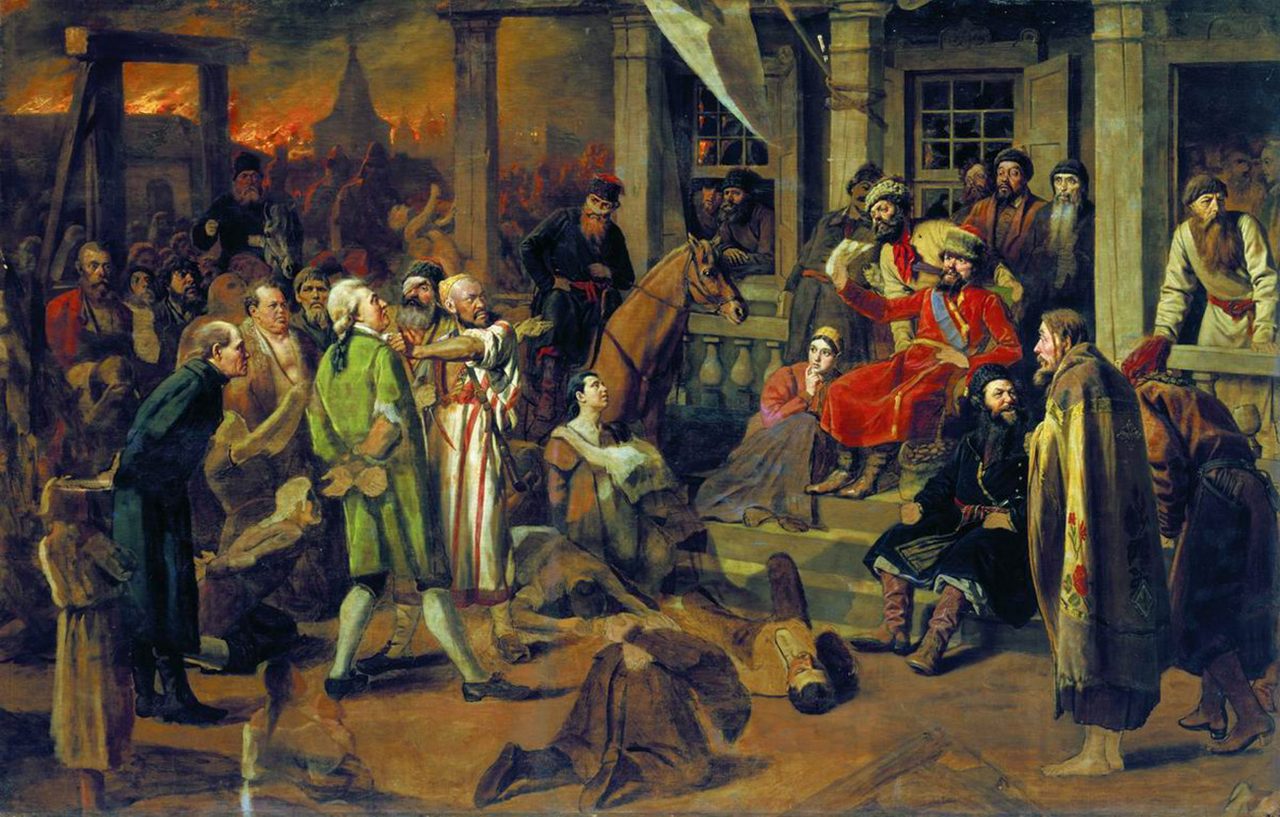
In 1773, the Russian Empire was rocked by the most terrible peasant uprising in its history – the rebellion led by Yemelyan Pugachev. This Don Cossack, who claimed to be the "miraculously saved" Emperor Peter III, managed to gather a large force of peasants and Cossacks dissatisfied with the government and, for several years, terrorized vast territories of the Urals, the Volga region and Bashkiria. Ultimately, however, the rebels were defeated and their "sovereign" was executed in Moscow.
Nevertheless, Catherine II drew the right conclusions from the “Russian uprising”. Living conditions for the peasants improved slightly and state policy toward the Cossacks and the Bashkirs, Tatars and Kalmyks, who had joined the impostor, became far more carefully considered.
See how artists depicted key events in Russian history during the Middle Ages, the 16th century and the 17th century.