

5 INDOOR games of Russian nobility (PICS)
Parlor games facilitated casual conversation, allowed flirtation and the display of wit. They weren't just a way to "kill time", but an important part of social life.
‘Fanty’ (Forfeits)
This game was popular in high society salons and at private gatherings of the nobility. It was even played at the court of Catherine the Great in the Hermitage. The word ‘fanty’ comes from the German word ‘Pfand’, meaning ‘pledge’. The game existed in two main variations, where the phantom could be either an object or a note with a task.

The rules were as follows: Each player placed a personal item (a ring, a watch, a handkerchief, etc.) in a hat. The host, without looking, drew the item and assigned a task to its owner. The host also gave away a forfeit to ensure fair play. If playing with paper tasks, the participants wrote the tasks on pieces of paper in advance, placed them in a hat and then took turns drawing and completing them.
The second option allowed for play without a host. The tasks could be very varied – from creative and intellectual to playful and romantic. For example, reading a fable, singing a romance, solving a charade, crawling under a table, kissing someone in the room, etc. The main rule was to remain within the bounds of propriety and to consider the age and status of the participants.
Charades
There were two types of charades: poetic and "live". In poetic charades, the author presented a word divided into parts (syllables or independent words). Each part and the entire word were described in verse prompts. For example, a charade about the word ‘Agathon’: "My first part is in the Turkish land / A terror for the Janissaries and often for the Sultan (aga)… And my whole is with the Russians / Has a name for nobles and peasants."
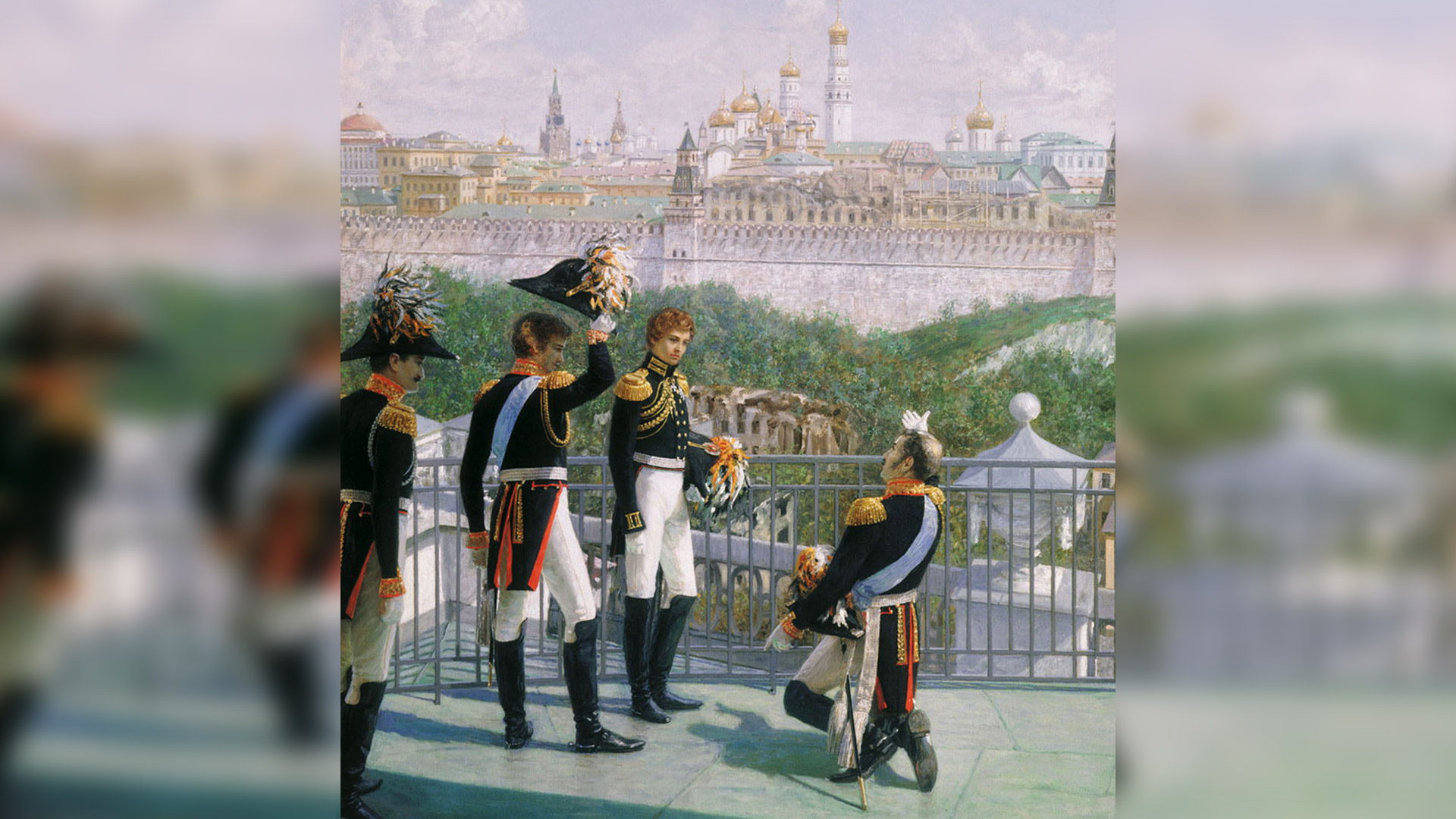
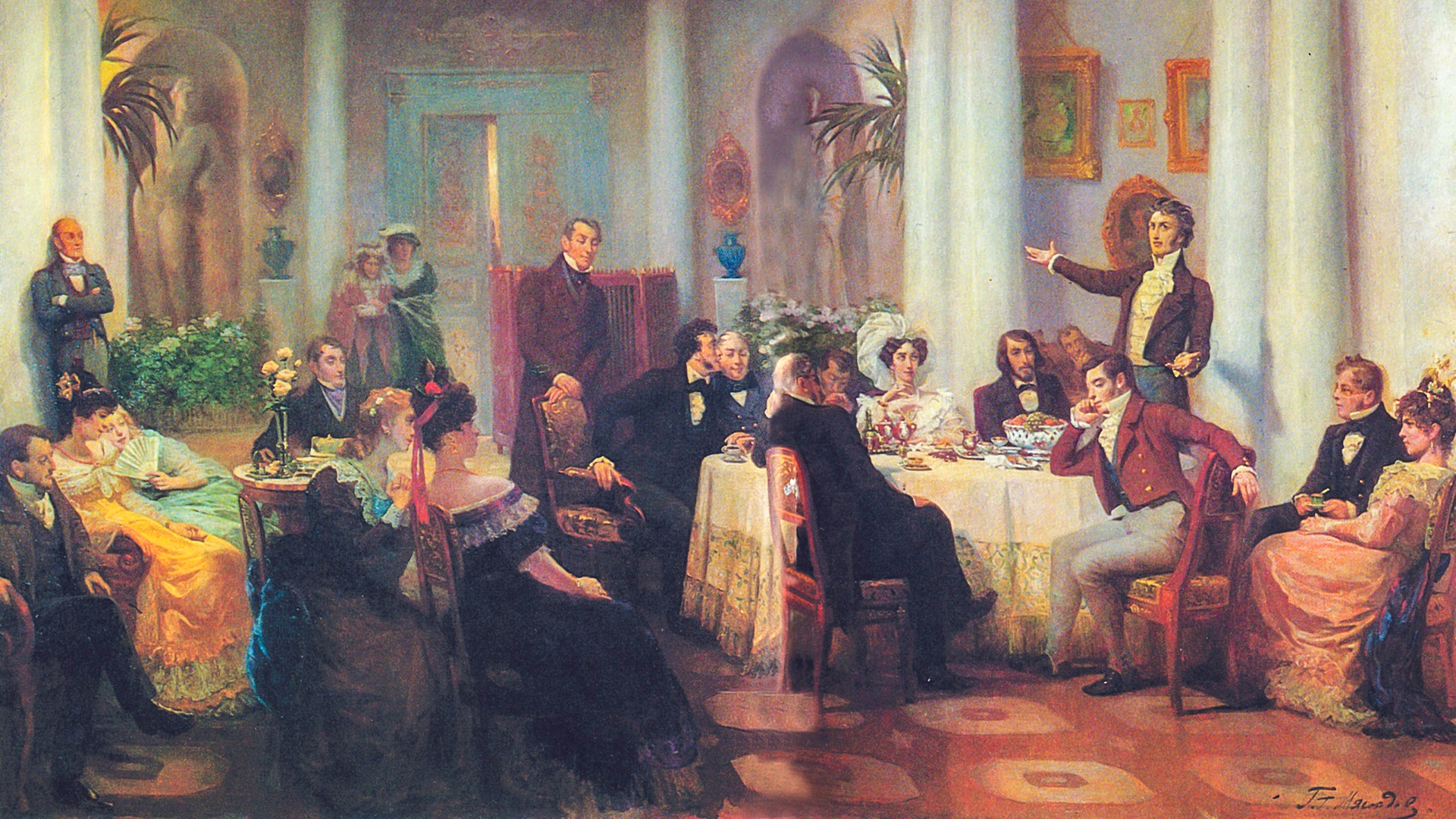
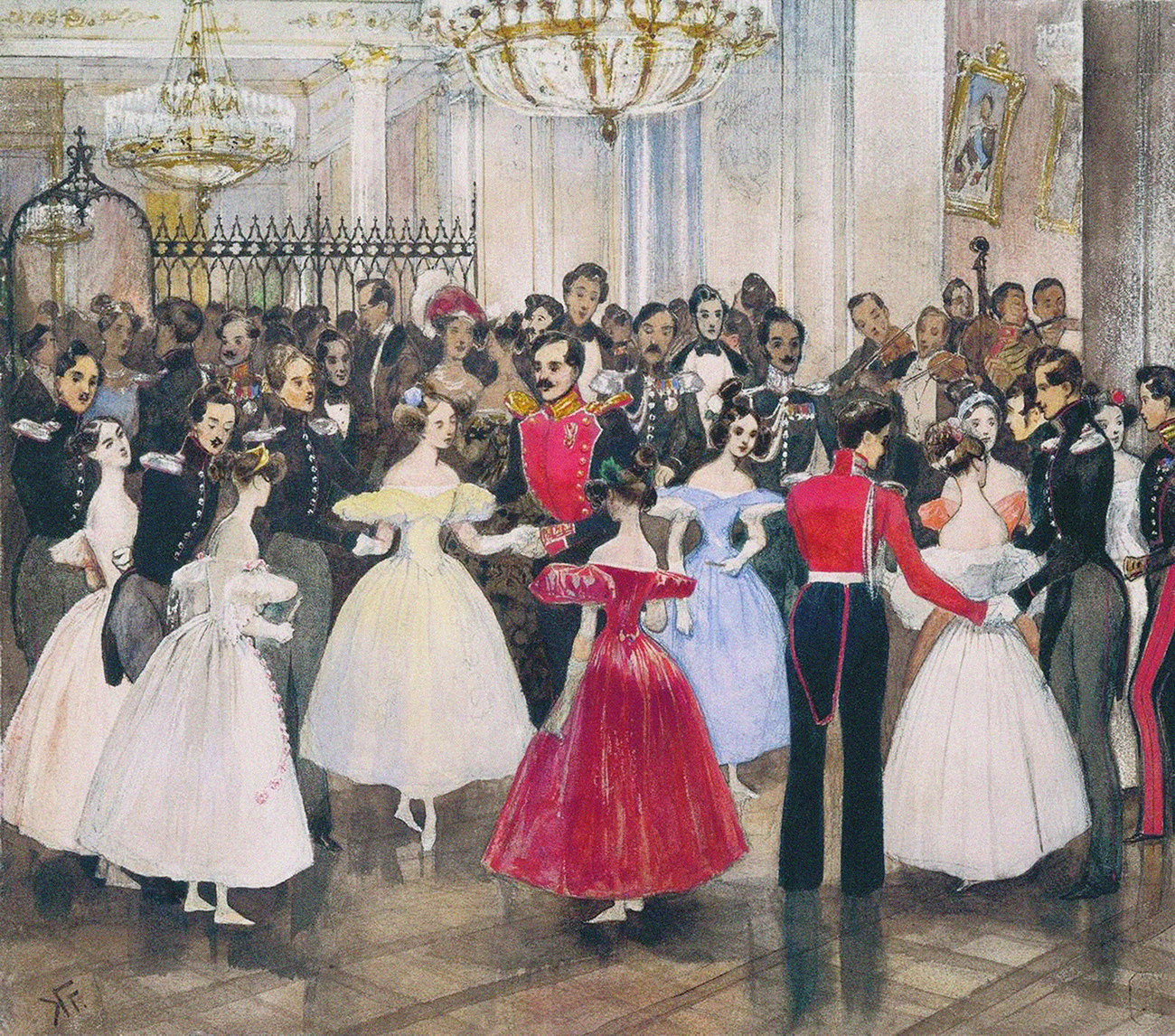
 High society salon. 1830s
In "live" charades, participants were divided into teams. One team would think of a word, for example, ‘par-ad, and silently, using costumes and props, act out first the first part (‘par’ – for example, depict a cloud of steam), then the second (‘ad’ – depict devils) and then, the entire word (‘parad’ – depict a procession). The second team had to guess what they had conceived.
‘Biryulki’
In the 19th century, ‘Biryulki’ evolved from a children's peasant pastime into one of the most popular games for all classes in Russia. Its essence was to carefully pull one piece from a pile without disturbing the others. By the 19th century, elaborate sets of ‘biryulki’ had become a fashionable social pastime. They were made of precious wood and ivory and stored in elegant boxes, sometimes shaped like fruits.
Intricately carved miniature household items (dishes, tools, etc.) were piled onto the table. Then, using a special wire hook, the player had to pull as many figures as possible from the pile without touching the neighboring figures. If a player moved an adjacent figure, the turn passed to the next player. The player who collected the most figures or was the first to reach a predetermined number of points, was the winner.
Flower Flirting
A popular 19th-century salon game that transformed the language of flowers into a fun way to meet new people and flirt. It gave young people the opportunity to exchange hints and confessions while observing etiquette.
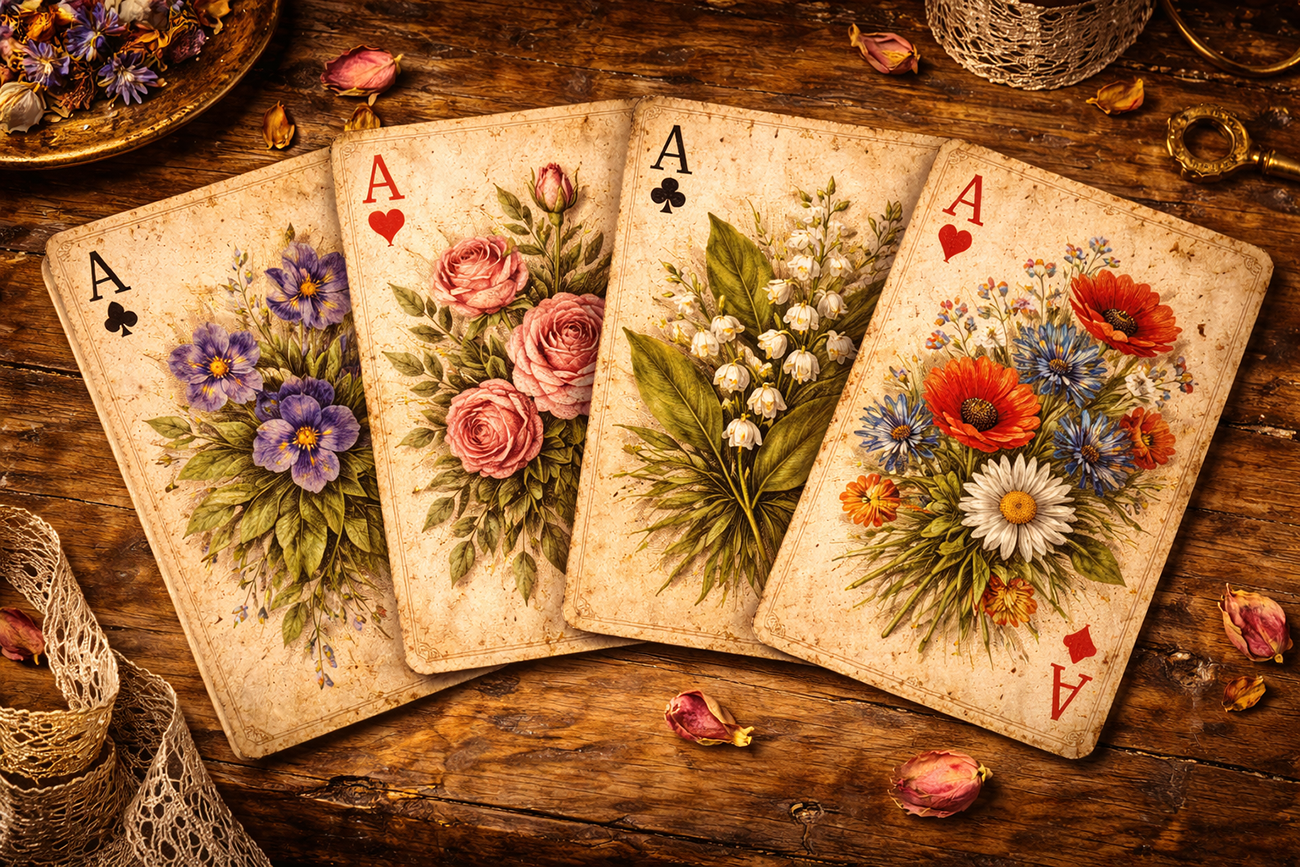
The game was played with a set of cards, often in an elegant box. Each card contained a list of 15-20 flower names and next to each name was a ready-made, playful or romantic saying. There were many cards and the phrases on them were repeated in different combinations, making deciphering them difficult.
Players exchanged cards, passing them from hand to hand. When passing a card, a player said only the name of a flower (for example, ‘Violet’ or ‘Rose’). The person receiving the card silently found the requested flower on it and read the phrase written next to it – this was the hidden message. The goal of the game was to initiate a dialogue by choosing a suitable phrase from their cards and naming another flower in response.
The game was popular among educated and wealthy circles. It helped overcome shyness and make new acquaintances in a fun way.
Tableaux vivants
A favorite pastime in noble salons and estates of the 19th century. Its essence consisted of recreating famous paintings, sculptures or literary scenes on stage using costumes, poses and lighting.
The game could be spontaneous or pre-planned. The first required no preparation: costumes and props were assembled from whatever was at hand. If the performances were timed to coincide with a pre-arranged date, family holiday or celebration, more serious preparation was, however, required. Costumes were sewn, sets and lighting were designed and rehearsals were held.
The subjects could range from fairy tales to ancient myths and biblical parables. The performers, dressed in appropriate costumes, froze in their poses, striving to convey the original work of art as closely as possible. The audience's task was to guess which painting or subject was being performed.