

This designer furnished living rooms across the USSR
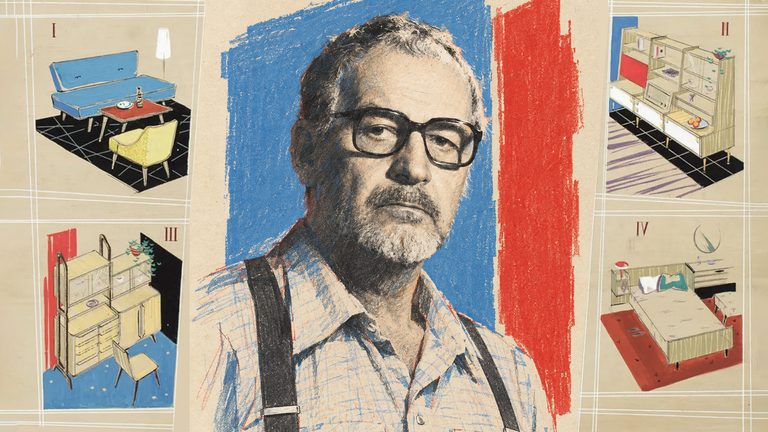
Working under strict constraints, Yuri Sluchevsky designed furniture that continues to command the admiration of collectors and design historians today.
The USSR first began to seriously consider furniture design for the general consumer only in the mid-1950s. This was directly linked to the onset of mass housing construction and the emergence of the ‘Khrushchevka’ – the standardized, compact apartment block that required furnishing.
In 1955, the Central Furniture Design Bureau (TsMKB) was established to systematically develop new furniture. The very next year, the first exhibition showcasing the latest domestic and foreign furniture designs was held at Gorky Park in Moscow.
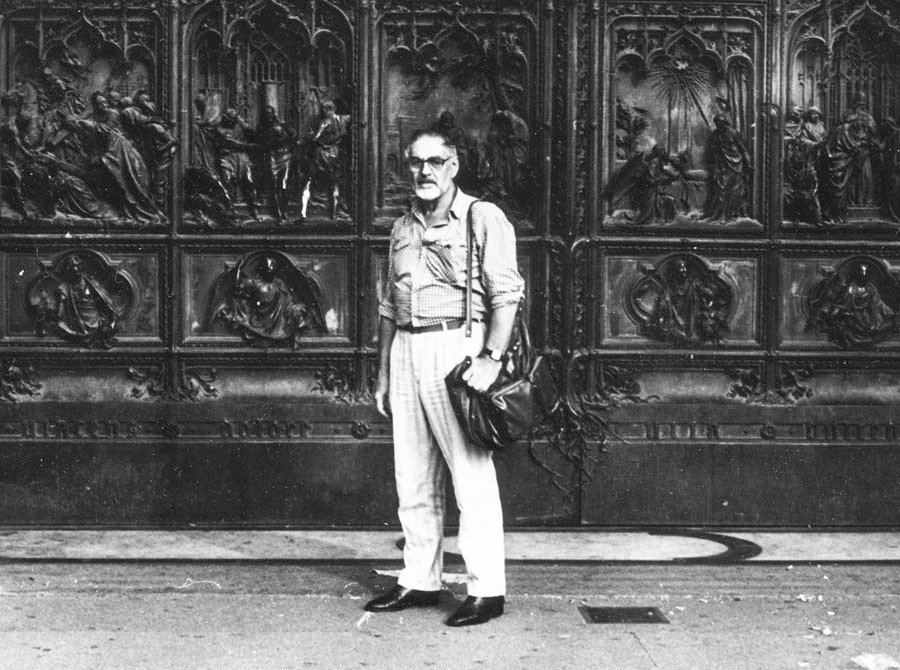 Yuri Sluchevsky
In 1958, the First All-Union Competition for the Best Furniture Designs took place. It marked the official shift in Soviet design away from historical stylizations toward modern modernism. Following the competition, 28 designs – including the famous ‘K58-103’ furniture set by Yuri Sluchevsky and Alexander Belorussky – were recommended for mass production.
Yuri Sluchevsky
Yuri Sluchevsky (1928–2017) was an outstanding Soviet and Russian artist and furniture designer, as well as a founder of the domestic school of furniture design. He was known as "the most famous Soviet furniture designer". During the 1950s and 1960s, he essentially furnished nearly every standardized, compact Soviet apartment.
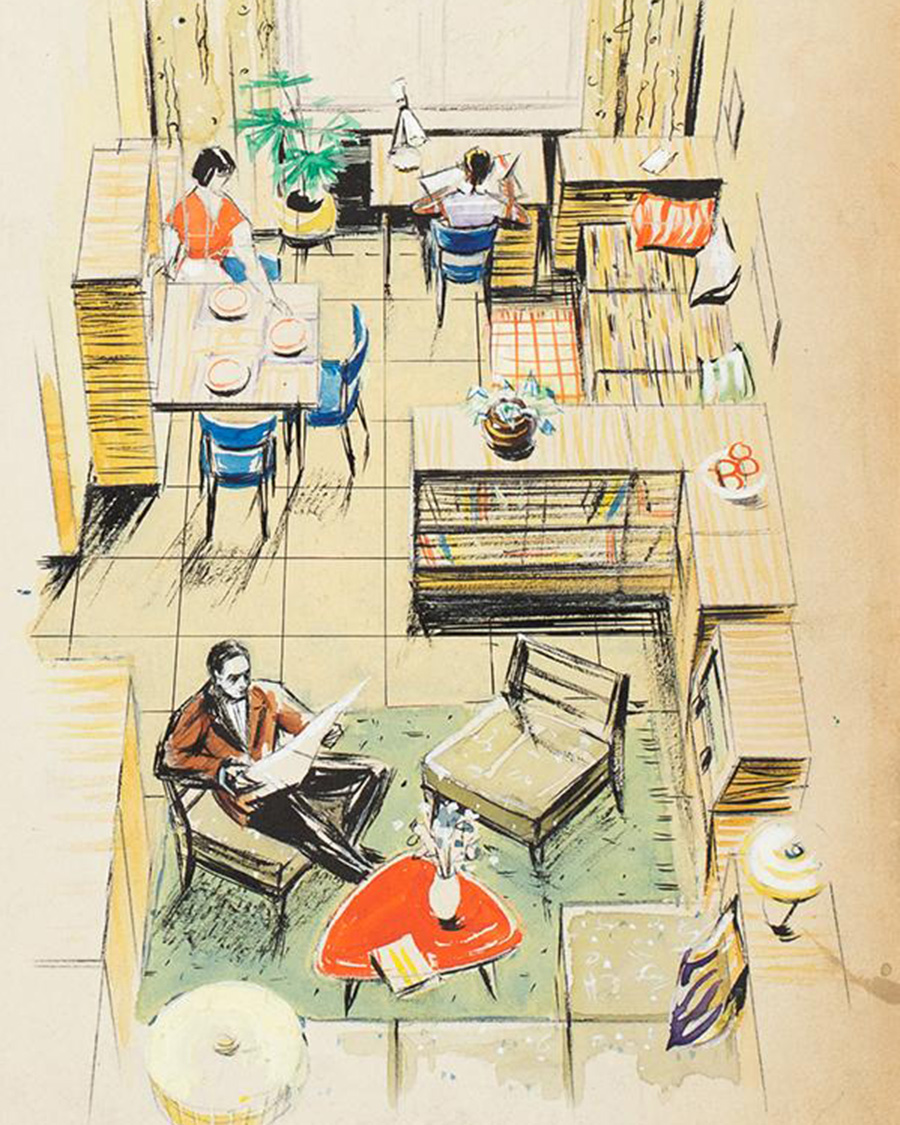
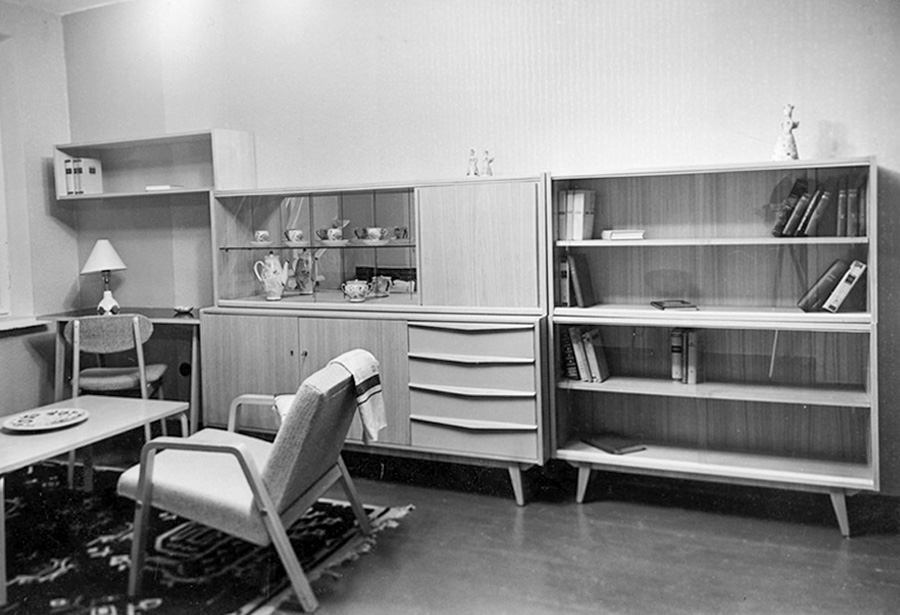 Room interior. 1961
He was born in Moscow in 1928. After World War II, he became a student in the first post-war intake of the legendary Stroganov School (MVKhPU). He was fortunate enough to study under teachers who were themselves graduates of the famous ‘Vkhutemas’ – the forge of the Soviet avant-garde. This continuity of tradition largely shaped his approach: a blend of artistic intuition and engineering precision.
He made his debut in 1956 at a furniture exhibition in Moscow, where, while still a postgraduate student at the Stroganov School, he presented his first major work: a modular system designed for compact apartments.
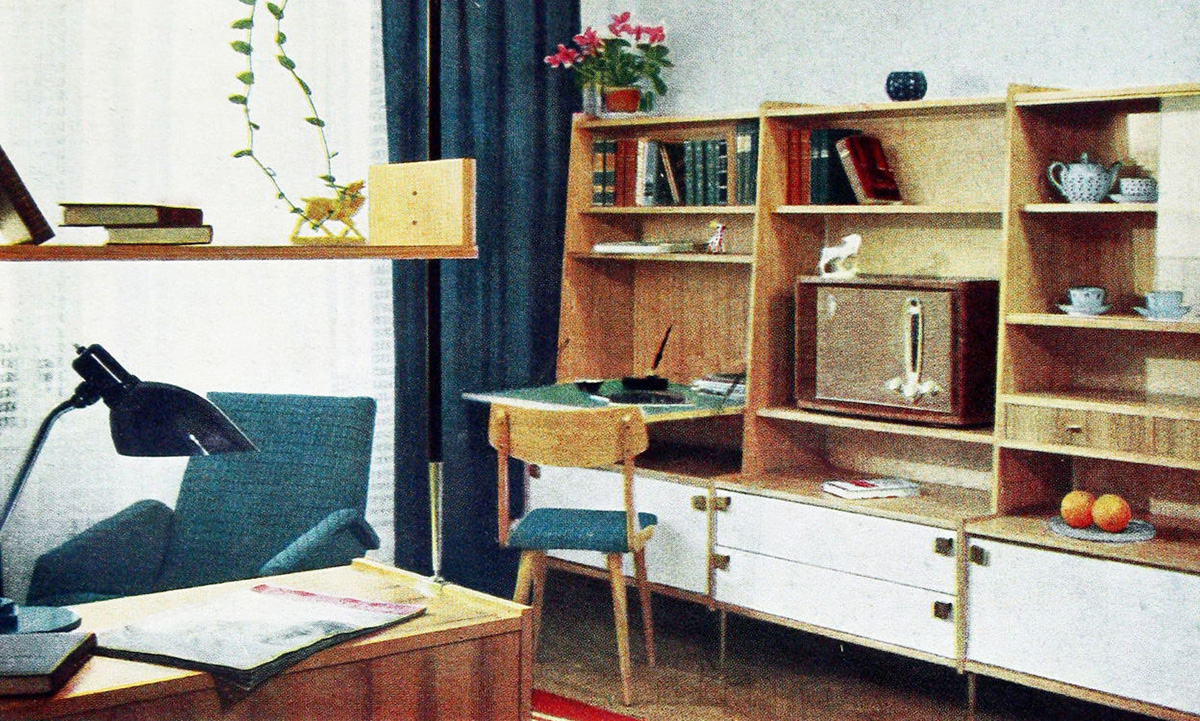
A pivotal moment in his career was the 1958 competition, where his ‘K58-103’ set was showcased.
Furniture for Real Life
The ‘K58-103’ set, created at the Central Furniture Design Bureau (TsMKB), became a sensation. Designed for a three-room apartment, the furniture was well-conceived, functional and free of unnecessary embellishments. It was this project that brought Sluchevsky nationwide fame; to this day, it remains a symbol of the ‘Thaw’ era.
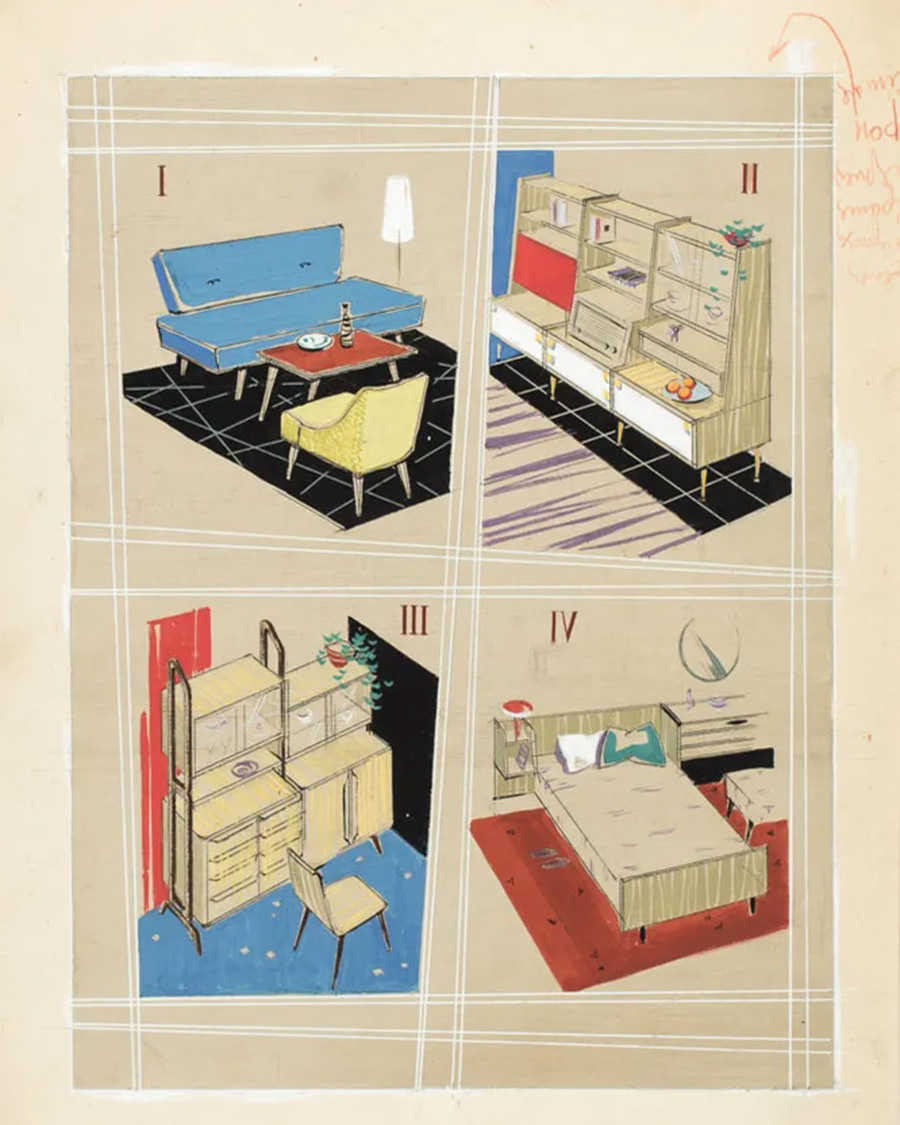
The designer worked during the era of mass housing construction, a time when millions of Soviet families were moving into small, standardized apartments. There was a need for furniture that was comfortable, affordable and capable of fitting into compact rooms. This was precisely the challenge Sluchevsky set out to solve.
His approach was inherently innovative: rather than designing individual pieces, he created systems. The sets consisted of standard elements that could be combined in various ways to suit a family's needs and the specific layout of their apartment. This marked a true revolution in the Soviet furniture industry – a shift from bulky, matching sets to flexible, modular solutions.
Over the course of his career, he completed more than 1,000 projects, ranging from furniture sets and individual pieces to specialized designs. Many of these were mass-produced by manufacturing plants in Moscow.