
Why is the ‘sbiten’ maker considered a street symbol of Tsarist Russia?

He was always found where people froze: in market squares, in shopping arcades, at cab stands and in suburban groves. In the memoirs of contemporaries, ‘sbiten’ was called "a beneficial, soul-soothing, divine frosty wine".
The name of the profession comes from ‘sbiten’, a drink known in Old Russia since the 12th century and consumed by most Russians until the late 19th century, when it was finally replaced by tea with sugar. The recipe varied and depended on the consumer's budget and tastes: from simple boiling water and honey to complex dried fruit infusions (figs, raisins, dates and cherries) with generous additions of spices – cloves, cardamom, cinnamon, saffron and ginger. The recipe was often passed down from generation to generation, constituting a professional secret.
Since the time of Peter the Great, it had been prized in the Russian navy as a cold and scurvy remedy. During the cholera epidemics in St. Petersburg (in 1831, 1848 and 1853), regiments that served ‘sbiten’ with ginger and pepper in the mornings had significantly lower morbidity and mortality rates.
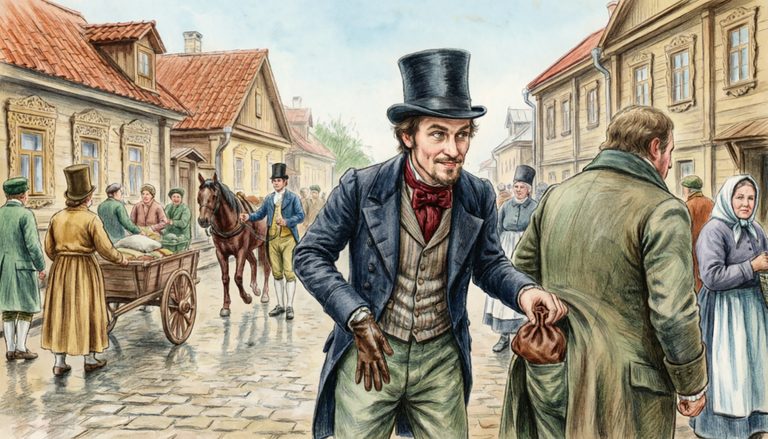
Meanwhile, a ‘sbiten’ seller was unmistakable. Writer Ivan Belousov described his appearance this way: "The ‘sbiten’ seller looked like a strange, armed man: a string of ‘kalachi’ hung from one side, a bag of coals from the other and, in front, in a specially designed device resembling a cartridge belt, was a row of thick glass cups… In his hands, the ‘sbiten’ seller held a round ‘samovar’ with a handle." This ‘samovar’-like vessel was called a ‘sbitennik’ (or ‘baklag’). Inside, it had a chimney for hot coals to keep the drink warm.
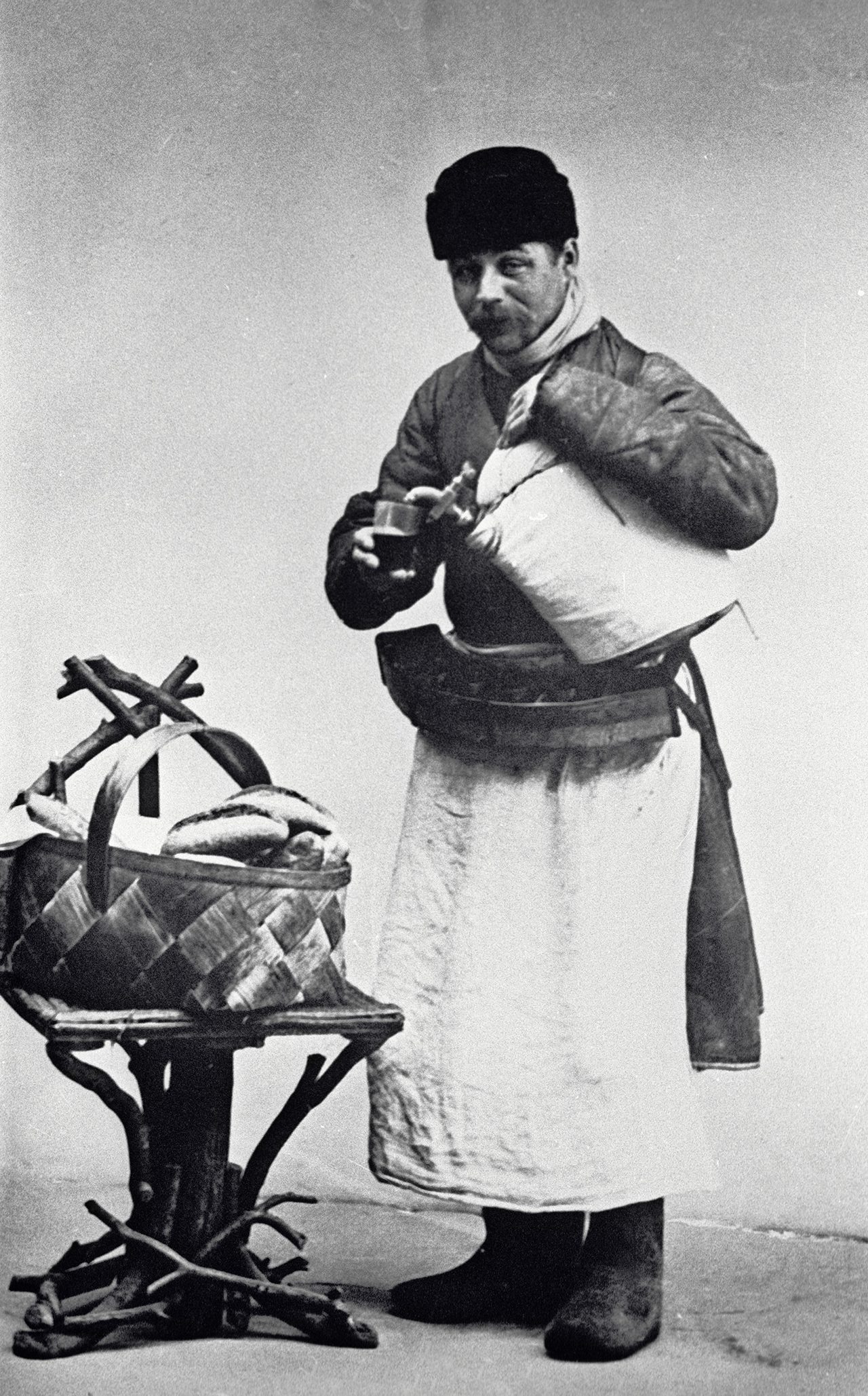
The seller's taunts went like this: "’Sbiten-sbitenek’, for the dandy!" "Hot ‘sbiten’, for the clerk!" ‘Sbiten’ wasn't a drink for the aristocracy – it was consumed by cabbies, street cleaners, petty officials, soldiers, clerks and the urban poor. There's a story about Leo Tolstoy, amazed by the greed with which a ragged man drank ‘sbiten’ at Khitrov Market, buying the drink with all the money he had on him and distributing it to the crowd around him. This incident demonstrates how truly ‘sbiten’ was a "hot drink of the people", as it was called in the Brockhaus and Efron Encyclopedic Dictionary.
At the beginning of the 19th century, there were approximately 400–450 ‘sbiten’-makers working in St. Petersburg, slightly fewer in Moscow and, in winter, each could earn up to 400 rubles per season. In the second half of the 19th century, affordable Chinese tea replaced ‘sbiten’ and, by the end of the century, the profession had virtually disappeared.