
Did you know that Tsar Ivan the Terrible was a writer?
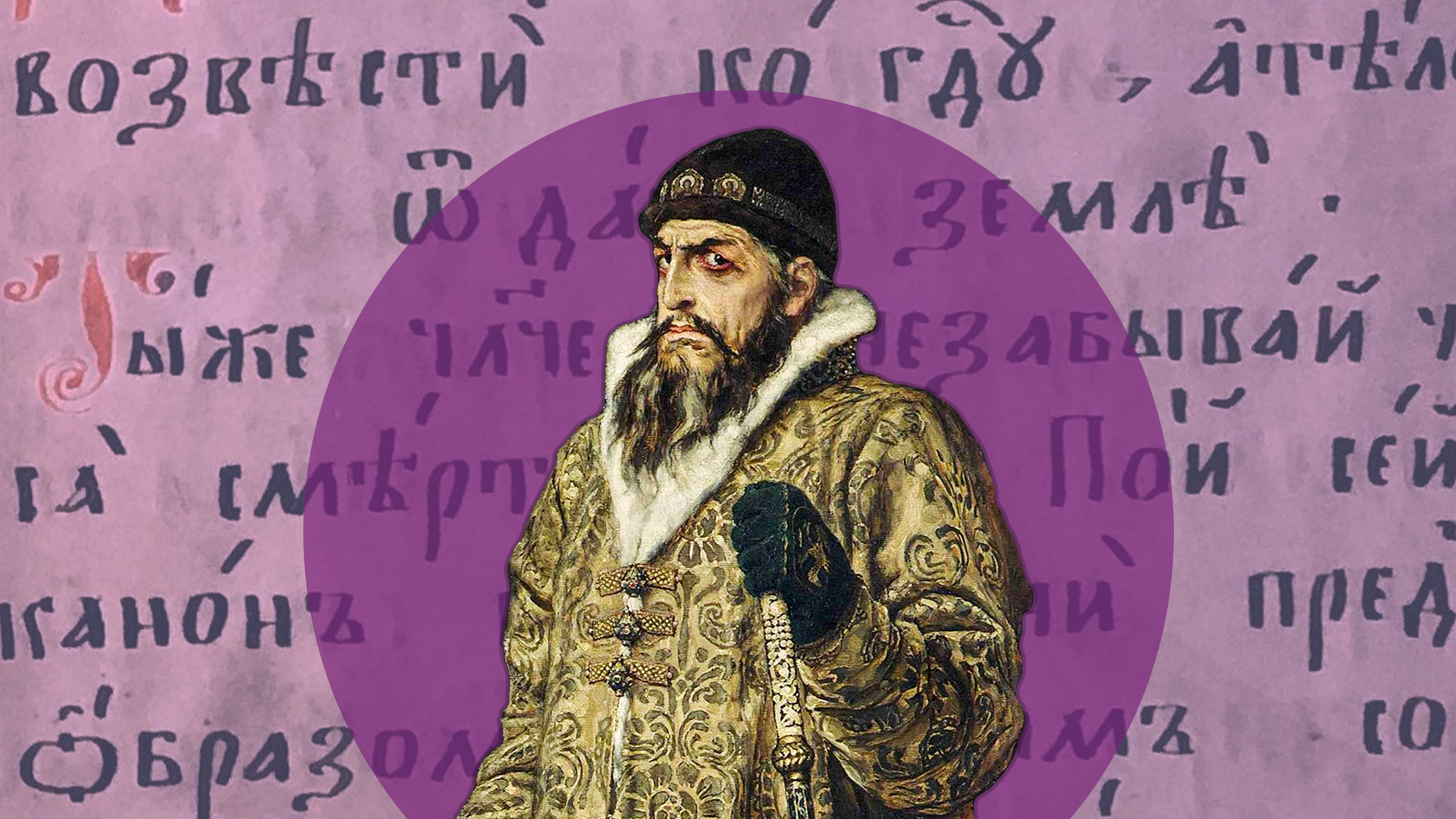
Ivan IV Vasilyevich, later nicknamed ‘the Terrible’, has gone down in history not only as a stern ruler, but also as a gifted writer.
The extent of the Russian Tsar's literary talent can be judged by his famous correspondence with a former military commander named Prince Andrei Kurbsky and by the texts of his prayers, some of which Ivan the Terrible wrote under the pseudonym ‘Parthenius the Urodivy’.
The correspondence between Ivan IV and Kurbsky is one of the key monuments of 16th-century Russian social thought. Essentially, it is a public debate about the nature of supreme authority and the rights of subjects. In April 1564, Prince Andrei Kurbsky, fearing the tsar's disgrace and execution, fled to the Grand Duchy of Lithuania, from where he sent the tsar an accusatory letter that marked the beginning of a heated debate.
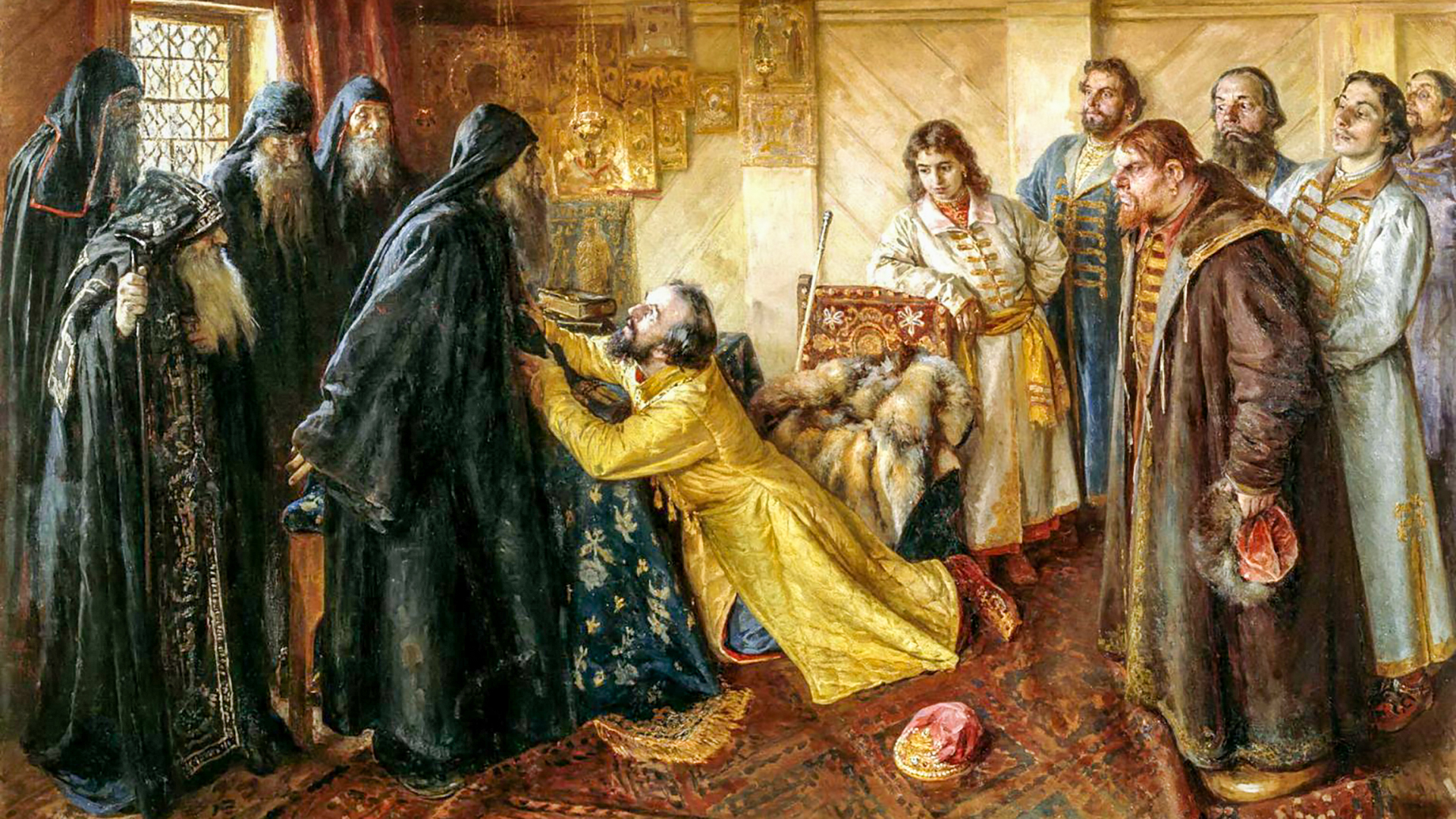
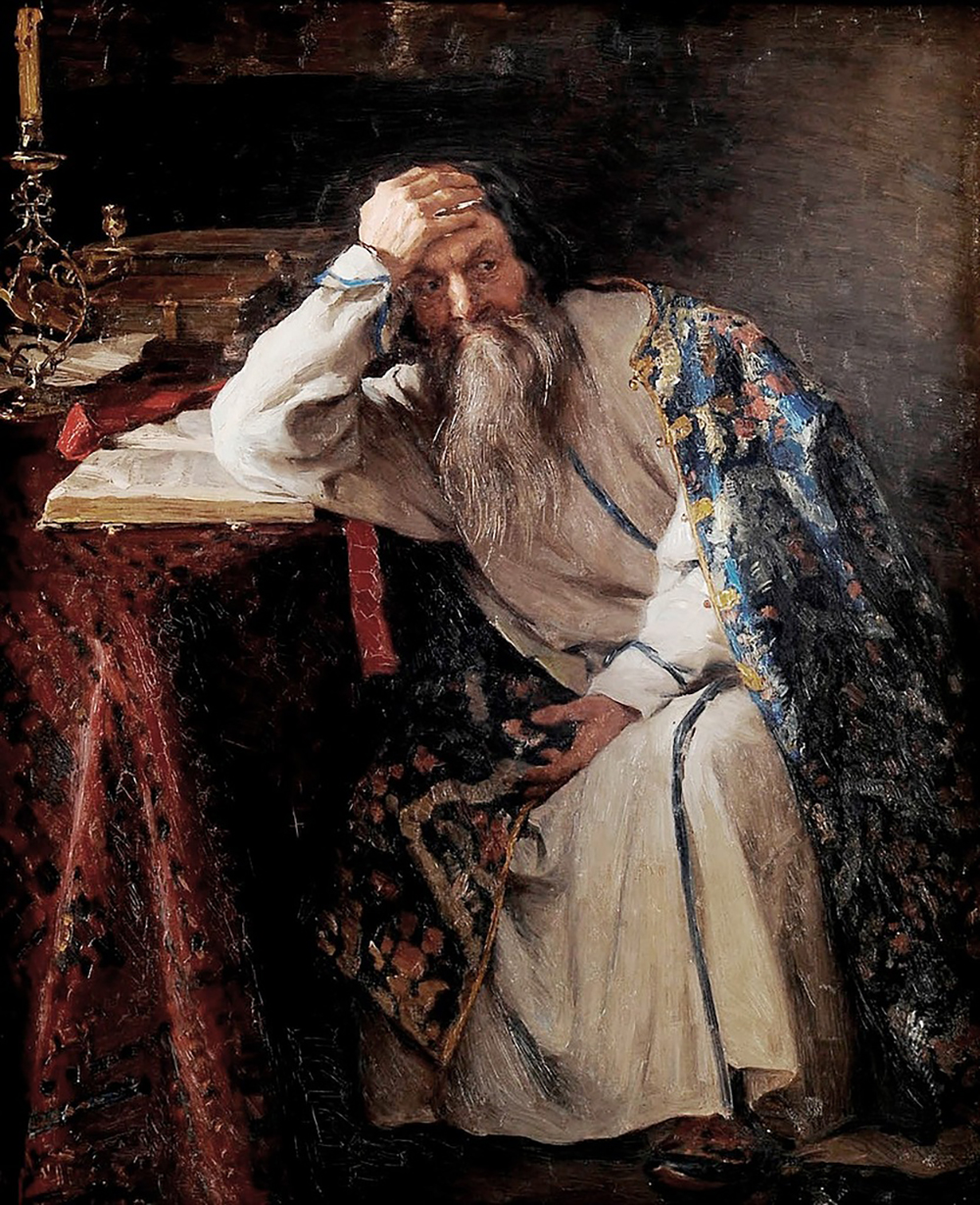 Claudius Lebedev. Ivan the Terrible
Five letters have survived in later copies: two from the tsar and three from the prince. The tsar and prince held different positions regarding the structure of the state. Kurbsky advocated limiting the monarchy to a council of aristocrats and accused the tsar of tyranny and the unjust execution of loyal commanders, which led to the weakening of the army and the state. Ivan the Terrible, on the other hand, believed that his power was of divine origin, and all subjects were God's slaves and the sovereign's serfs. Ivan the Terrible's letters are distinguished by a vivid, emotional style, whose register ranges from Church Slavonicisms to near-abuse.
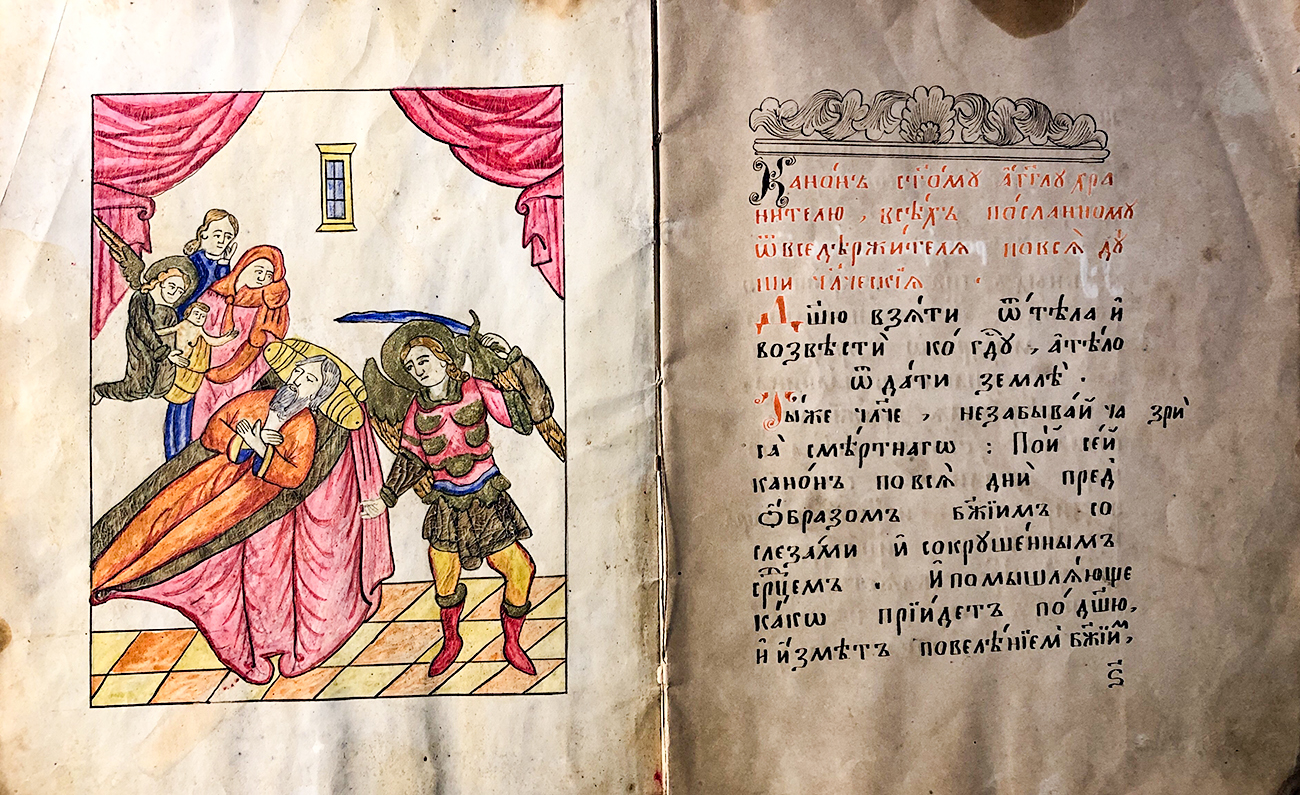 Canon to the Terrible Angel, the Commander-in-Chief (Old Believer illuminated manuscript, second half of the 19th century)
The tsar also authored several liturgical texts that reveal Ivan IV's deep and contradictory religiosity. Among them are the ‘Canon to the Angel of Ivan the Terrible, the Commander-in-Chief’ (signed with the pseudonym Parthenius the Urodivy); a prayer before the storming of Kazan; and a hymn of thanksgiving after the capture of Kazan. Stichera (i.e., hymns) to Metropolitan Peter, the Vladimir Icon, as well as others. Also, the Spiritual Charter (testament) of 1572 is a work at the intersection of confession, sermon and testament.
Unlike the state prayers for victory, his personal prayers (such as the ‘Canon to the Terrible Angel’) are striking in their existential tension, fear of death and thirst for forgiveness, revealing another facet of the tsar's personality.