

Why were professional mourners valued in Old Russia?
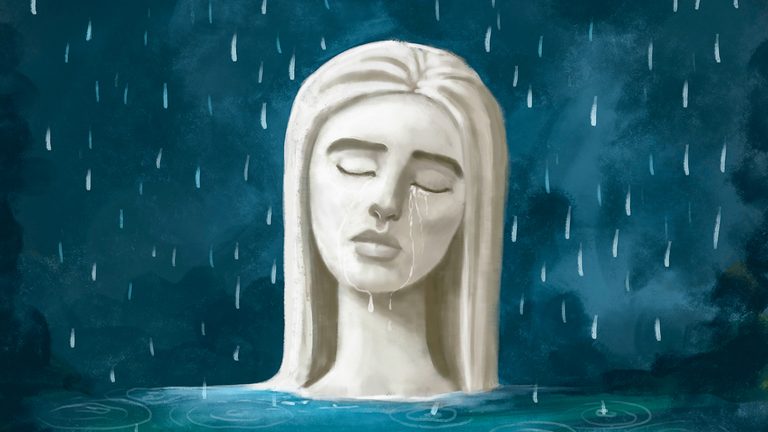
They were hired to perform ritual mourning not only at funerals, but also at weddings, send offs for soldiers and other important occasions.
Mourners, wailers, lamenters are one of the most ancient and revered professions in Old Russia. Their art was essential at all key moments in a person’s life, which were perceived as transitions from one state to another.
Skilled professional mourners were well known in the area; they might even be specially invited from neighboring villages. They were trained in their art from childhood and the secrets of the craft were often passed down from generation to generation. The amount of compensation depended on the skill of the performer, the duration of the ritual and the status of the client’s family. The more heart-wrenching, emotional and loud the wailing was, the higher the fee. However, payment was not limited to money. Mourners often came simply to participate in the meal or to receive traditional gifts.
Funeral
Their main area of activity was funerals and memorial services. It was believed that wailing helped the soul of the deceased to properly pass into the afterlife and not become an evil spirit. The funeral rite had its own order, sequence and timing for performing ritual actions, as well as its own “leaders”.
When word spread in the neighborhood that someone had died, people were invited to the “final farewell”. At the deceased’s home, the “funeral rites” began: the body was washed with water, dressed in “funeral” clothes and laid on a bench in the front corner with the head facing the icons. All of this was done to the accompaniment of the mourners’ laments, which recounted the life of the deceased.
They wailed for three days. First at home, then in the street: When they placed the deceased in a coffin, carried them out of the house, took them to the cemetery and buried them.
The talented professional mourner not only knew how to convey the feelings of the deceased’s loved ones. Her cry was something like an obituary in a newspaper: it recounted the life story of the deceased, the cause of death and the fate of the family.
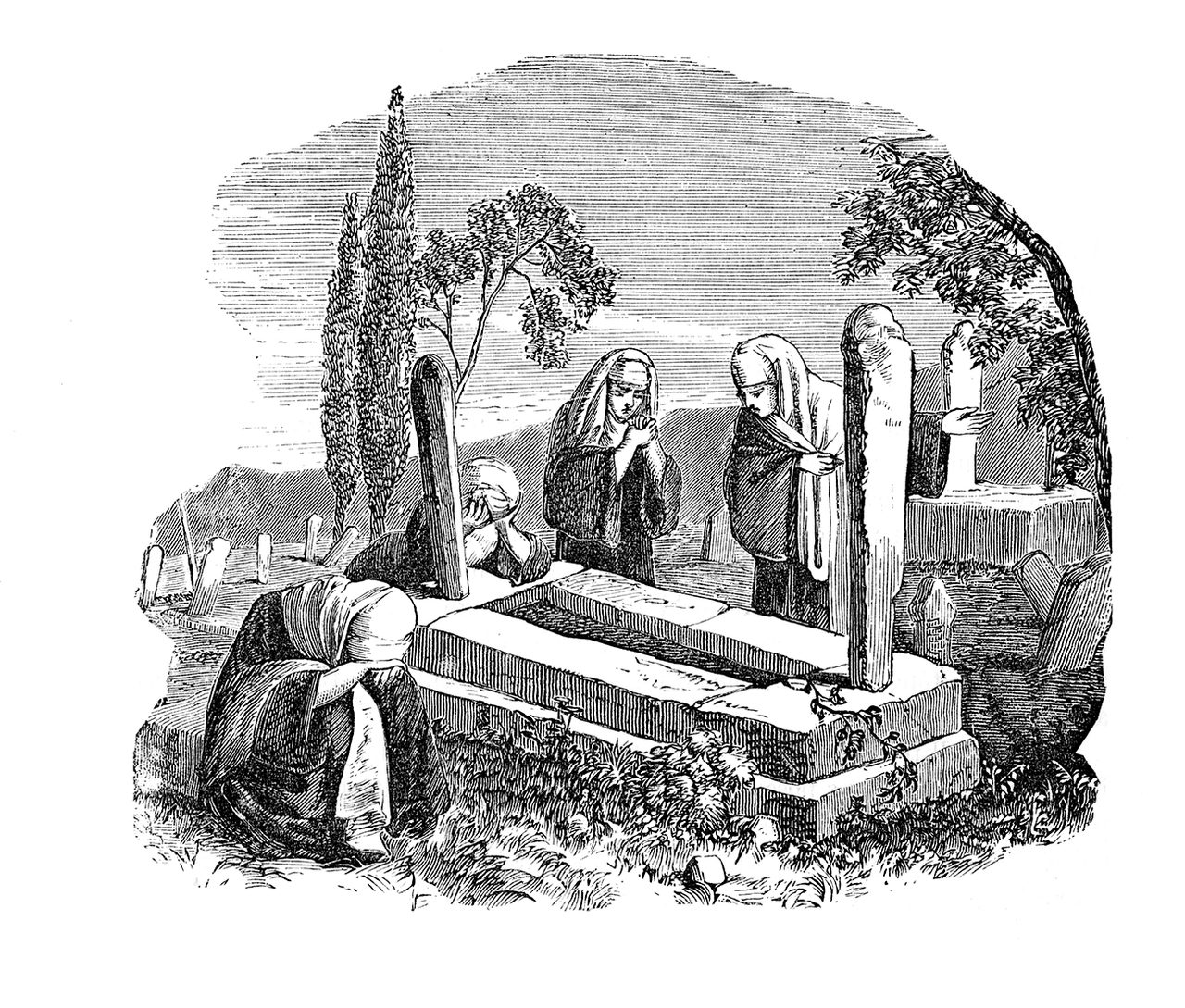 Woman Weeping at the Grave (Jesus) from the pre-1900 book "The Land and the Book" from 1879
Other occasions
Nevertheless, professional mourners were also invited to weddings: weeping at a wedding symbolized the “death” of the bride’s former, maiden life and her transition to the new status of a married woman. They helped the bride express the grief required by the ritual.
Enlisting in the army (especially for a long term, such as 25 years) also marked the “death” of one’s former life. The mourners wept for the young man, as if he were a living dead man, bidding farewell to his freedom and his familiar way of life.
Sometimes they were called upon for other tragic occasions, for example, when a person went missing or in the wake of a natural disaster.
Headliners
One of the most famous Russian professional mourners was Irina Andreevna Fedosova (1827–1899). She was born into a family of state peasants in the Zaonezhye region who had never known serfdom. From childhood, she absorbed ancient ritual traditions and, by adulthood, had become a true guardian of folklore. Her contemporaries marveled at her phenomenal memory: she knew tens of thousands of poems, epic tales and laments by heart, yet improvised each time, creating unique texts tailored to a specific fate.
Fedosova gained worldwide fame through her collaboration with the folklorist E. Barsov, author of the three-volume work ‘Laments of the Northern Land’. Her art was highly praised by composers Balakirev and Rimsky-Korsakov, singer Fyodor Chaliapin and writer Maxim Gorky. There is even a monument erected to her in Petrozavodsk.