
5 fears Russian tsars had
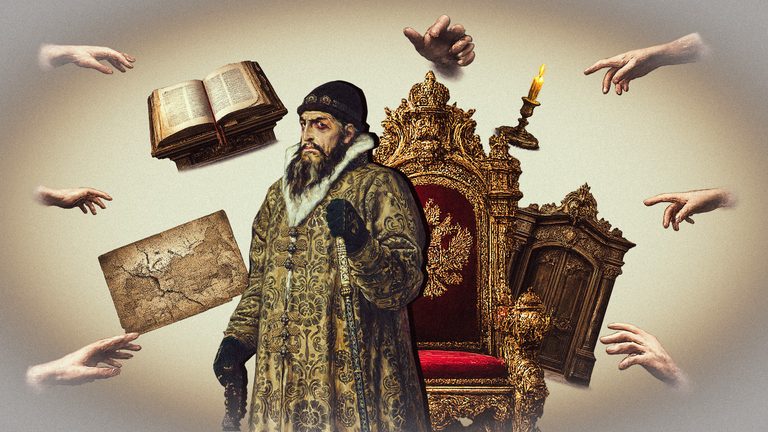
Despite their status as God's anointed ones, the tsars feared quite mundane and earthly things: conspiracies, rebellions and even cockroaches.
1. Fear of conspiracy & violent death
The fear of losing the throne and one’s life haunted almost every ruler, beginning with Ivan the Terrible. The tsar, whose childhood was spent amidst boyar intrigues, became a true paranoid by the end of his life. He saw conspiracies everywhere and fought them with oprichnina (early secret police force) terror.
In the 18th century, during the era of palace coups, the fear of being murdered at night became widespread. Empress Elizabeth Petrovna, who ascended to the throne through a coup d'état, feared the same fate until her death. Her nephew, Peter III, also lived in constant anticipation – and was overthrown and murdered, just as he had foreseen.
Paul I feared poison and intrigue and was killed as a result of the very conspiracy he had so dreaded.
Tsar Alexander II, who went down in history as the ‘Liberator’ (he abolished serfdom), survived seven (!) assassination attempts. However, the last one killed him. His son, Alexander III, inherited his father's fear of regicide.
2. Fear of popular revolt and revolution
Following the Decembrist Uprising, which occurred on the very first day of his reign, Nicholas I sincerely feared the "revolutionary contagion" from Europe. He saw conspiracy even in liberal discussions and did everything in his power to isolate Russia. This phobia was passed on to his grandson Alexander III, who, after his father's death, became convinced that liberal concessions would lead to the demise of the dynasty. He embarked on a course of "counter-reforms".
The last emperor, Nicholas II, although he shared this fear, expressed it differently. He feared conflict with society, yet, at the same time, he trusted neither the parliament nor his own ministers. He hesitated to take harsh measures, which largely led to the revolution.
3. The burden of guilt & childhood trauma
The most striking example of a difficult childhood is Paul I. Immediately after his birth, he was given over to the care of nannies who frightened him with stories of house spirits and ghosts. As a result, he grew up to be an anxious and suspicious man.
His son, Alexander I, bore the heavy burden of his father's murder. A sense of guilt haunted Alexander his entire life. He feared not death, but retribution – and, eventually, retreated into mysticism.
Nicholas II grew up in the shadow of his powerful father, Alexander III, and from childhood, he feared failing to live up to his father's expectations. He felt weak and unprepared for power. This uncertainty gave rise to indecision, which at critical moments resulted in fatal inaction.
4. Irrational Phobias
These bizarre fears weren't directly related to politics, but they profoundly influenced the monarchs' daily lives.
Peter I, a giant and a reformer, was terrified of cockroaches – at the sight of them, he would nearly faint and flee the room. Until the age of 14, he was afraid of water, but he managed to overcome this fear and established the Russian navy. He also disliked high ceilings.
Elizabeth Petrovna, meanwhile, was afraid of the dark, so she never stayed alone in her bedroom. Peter III was afraid of cannon fire, which was absurd for a military man.
Nicholas I (according to some accounts) was afraid of cold food and loud noises.
5. Fear of the supernatural
A common trait among many Russian tsars was a belief in omens, witchcraft and prophecies. Ivan the Terrible sincerely believed that sorcerers were trying to cast a spell on him. Alexei Mikhailovich, the second tsar of the Romanov dynasty, feared "evil spirits" and observed numerous rituals to protect himself.
Alexander I was fascinated by mysticism, attended spiritualistic séances and searched the Bible for fateful prophecies. Nicholas II was a fatalist: he believed in omens (the Khodynka disaster on his coronation day, a falling star) and placed great trust in the "elder" Grigory Rasputin, considering him a messenger of God.