
How Nikolai Sklifosovsky became the founder of modern surgery
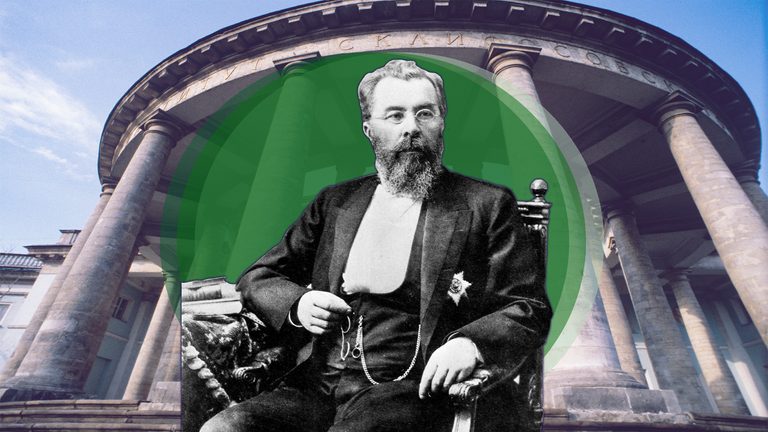
Both his parents died early, so grew up in an orphanage and, during his studies, he would faint at the sight of blood.
His name is often shortened to the first syllable – Sklif. This refers not to the person, but to the Institute of Emergency Care in central Moscow that bears his name. The institute specializes in emergency situations. Ambulances take patients there in cases of emergency surgery, resuscitation, burns, acute poisoning and more. Nikolai Sklifosovsky himself had no direct connection to the institute – the institution was opened two decades after the doctor's death. However, his contribution to emergency medical care was enormous and his methods were honed on the battlefields of four European wars.
From a fear of blood to world wars
He was born on April 6, 1836, in the Kherson province, the ninth of 12 children in a poor noble family. Having lost his mother early, Nikolai, along with his younger brothers and sisters, was sent by his father to an orphanage in Odessa. In 1854, he graduated from high school with a silver medal and, a year later, he entered the medical faculty of Moscow University.
His mentor was the renowned surgeon Fyodor Inozemtsev. According to biographers, during his first training operation, the future surgeon fainted at the sight of blood, but, by the second, he had gotten used to it. The student's next deep faint occurred in the anatomy theater – he lost consciousness from exhaustion right next to a corpse. In 1859, he graduated from university, later defended his doctoral dissertation and then went on to gain medical experience on the battlefields of international wars.
Military Field Surgery
Sklifosovsky was the "doctor of all wars" of the second half of the 19th century. He participated in four campaigns: the Austro-Prussian War (1866), the Franco-Prussian War (1870-1871), the Serbian-Montenegrin-Turkish War (1876) and the Russo-Turkish War (1877-1878). This extreme experience allowed him to develop treatment principles that are still relevant today.
First, he insisted that the wounded be transported as quickly as possible to field hospitals, where they would receive qualified medical care.
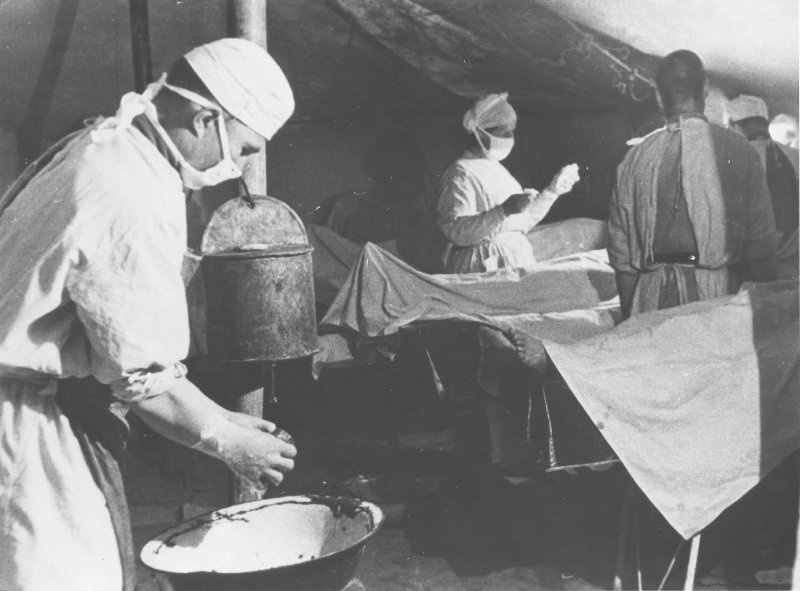 An operating room of a small motorized rifle battalion in a tent. 1944
Second, in contrast to the then-common practice of immediate amputations, Sklifosovsky advocated organ-preserving surgery. He was the first in Russia to widely use resections (the removal of damaged parts) of joints and bones, while preserving the injured limb. He developed an original operation for fusing long tubular bones – a method known as the ‘Russian lock’ or ‘Sklifosovsky lock’. It ensured secure fixation of bone fragments and is still used in modified forms today.
A Revolution in Hygiene
In the 19th century, postoperative mortality from sepsis (blood poisoning) and gangrene was enormous. Sklifosovsky was one of the first in Russia to recognize the cause and began a systematic fight against infection. He became an active advocate of Joseph Lister's antiseptic method, which involved the use of chemicals (carbolic acid and other agents) to kill bacteria in wounds.
Sklifosovsky did not stop at chemical treatment. He was one of the first to introduce asepsis – physical methods of disinfection. The surgeon required his staff to wear clean gowns, wash and disinfect their hands and introduced "hot treatment" of surgical instruments and medical linens (boiling, steaming).
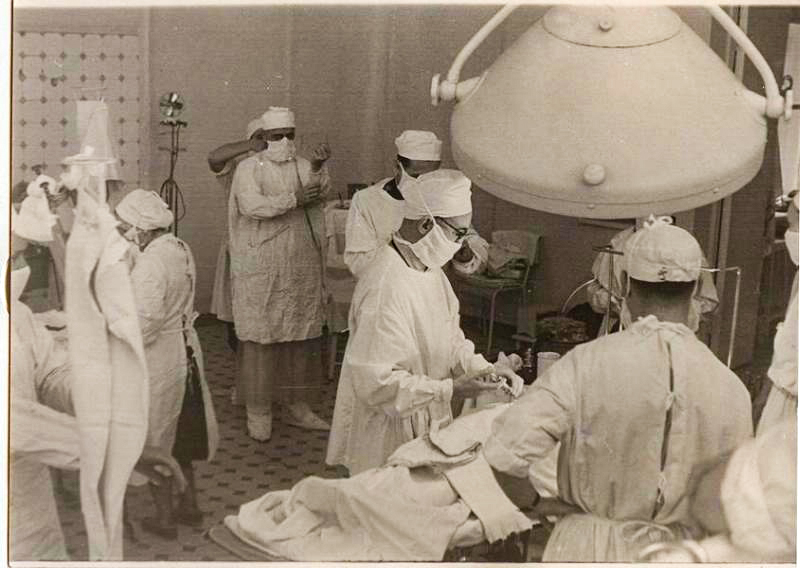 Surgeons in an operating room. 1940s
Contemporaries quipped: "Isn't it funny that such a large man is afraid of such small creatures as bacteria, which he can't even see!" However, thanks to his persistence, postoperative mortality in Russian clinics dropped sharply.
Pioneer of Abdominal Surgery
At the end of the 19th century, abdominal and thoracic surgery was in its infancy. Sklifosovsky became a pioneer in this field in Russia. He was one of the first to perform a gastrotomy (opening the stomach) and worked on the treatment of esophageal cancer.
Sklifosovsky also developed surgeries for goiter (thyroid gland) removal, treatment of cerebral hernias and diseases of the gallbladder and bladder. He also actively introduced general anesthesia (chloroform and ether) into practice, becoming a pioneer in local anesthesia.
Organizer of Medical Science & Education
Sklifosovsky's contribution as a healthcare organizer and educator is no less significant than his surgical achievements. As Dean of the Faculty of Medicine at Moscow University (1880-1893), he initiated the creation of an entire clinical campus: He raised funds and united disparate clinics into a single complex, which became the foundation of modern university medicine in Moscow.
From 1893 to 1900, he headed the Imperial Clinical Institute of Grand Duchess Elena Pavlovna in St. Petersburg (now the St. Petersburg Medical Academy of Postgraduate Education). Under his leadership, the institute was equipped with the latest equipment, including an X-ray room, and became a leading center for advanced medical training. He was also a proponent of higher medical education for women: during the Russo-Turkish War, he led a group of female doctors who worked in hospitals alongside men.
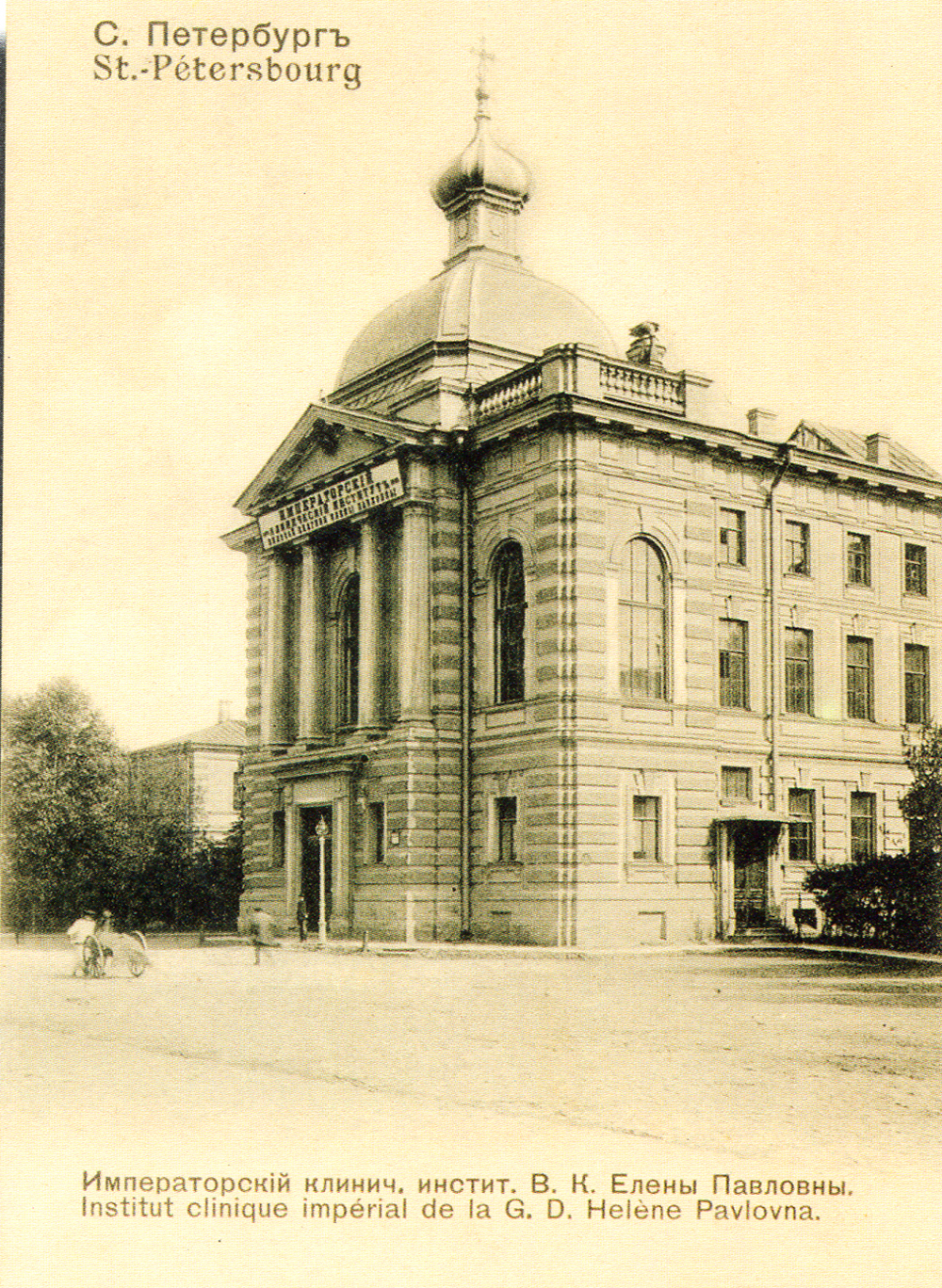 Imperial Clinical Institute of Grand Duchess Elena Pavlovna
Nikolai Sklifosovsky was a world-class surgeon. He left behind approximately 100 scientific papers on surgery, many of which remain relevant today. He was an honorary member of the London Medical Society, the Society of Czech Physicians in Prague and the surgical societies of Paris and Budapest. He not only saved many lives, but also created a system of treatment that transformed surgery into an exact science.
Sklifosovsky's biographers also claim that, in 1884, Professor Sklifosovsky ceremoniously presented his medical diploma to Anton Chekhov, a graduate of Moscow University. However, three years later, Chekhov would finally abandon medicine for literature.